11 Amazing Duda Website Examples You Absolutely Must See

October 7, 2020
0 minute read

Thousands of digital marketing agencies, SaaS companies and web professionals around the globe use Duda to create fantastic, feature-rich websites for all kinds of small business customers. Our website builder platform is highly flexible and loaded with special tools that make team collaboration and client management incredibly easy (and even fun!). 


Amazing Duda Website Examples

The end result of all this is a plethora of amazing Duda websites with gorgeous designs, ultra-smooth user experiences, and conversion-driving features that turn site visitors into paying customers. Just take a look at these examples of actual Duda websites built by actual Duda customers to get an idea of what we’re on about…

A strong digital presence is an absolute must for any small business, but that’s especially true for organizations that offer highly specialized services that consumers will want to research in depth before engaging with the provider. Case in point, Japan Mobility — a fascinating company that helps ease the transition for people moving to Japan. 

Japan Mobility packs loads of comprehensive information on all kinds of subjects from converting your drivers license to opening a bank account into a beautiful design that offers a very intuitive user experience. Well done, dudes!

Credited Agency: WSI (Nagoya, Japan)


Screenshot of the homepage of Japan Mobility website

If people are considering hiring you to design and build their dream home, you definitely want them to have a good feeling about your company’s previous work. We’re sure that’s no problem for Legacy Homes of Idaho as their site includes dozens of stunning images that show off their previous projects along with a full outline of the process they go through when bringing a client’s vision to life.

Credited Agency: Platform 513

Screenshot of the homepage of Legacy Homes website

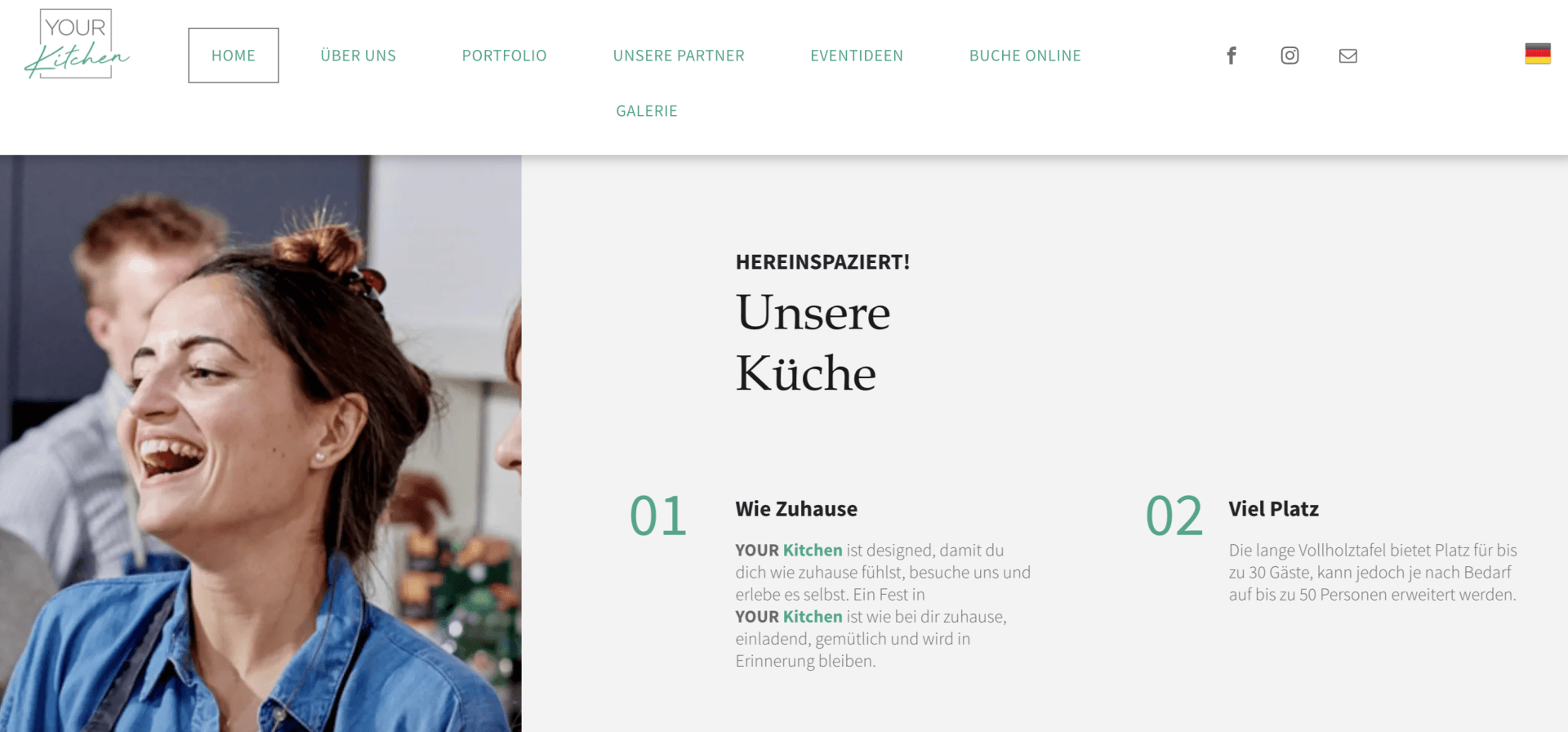
Your Kitchen offers a Michelin-quality kitchen and cozy dining environment that can be rented out for nearly any kind of event in Vienna, Austria. The sleek design of the site combined with images of happy cooks and diners immediately communicates to site visitors that this is absolutely where you want to be during your next party!

Credited Agency: Edelweiss Digital

Screenshot of the homepage of Your Kitchen website

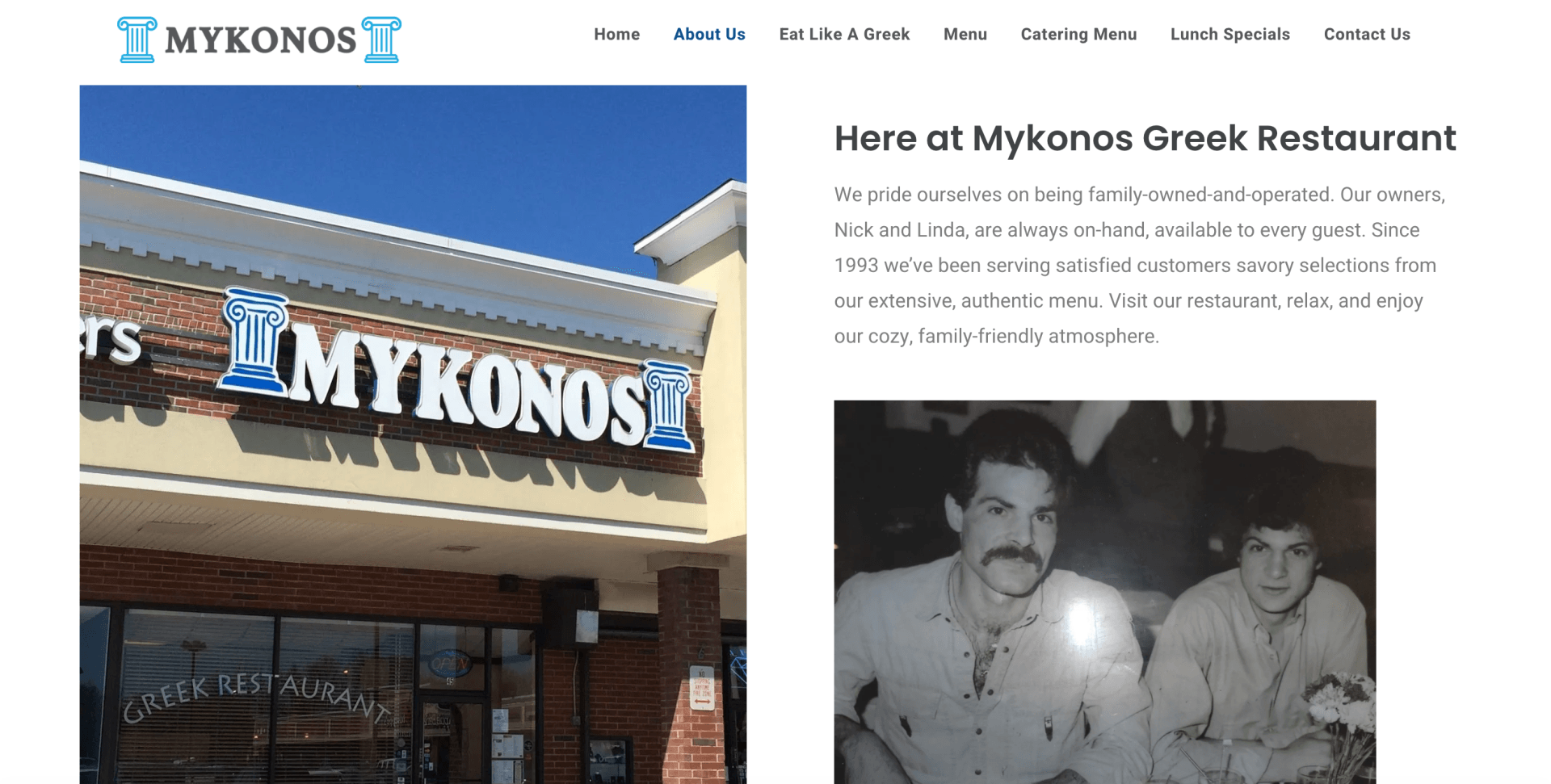
An essential element of any successful website is a compelling story that evokes some kind of emotion in visitors. The site for Mykonos Greek Restaurant offers a masterclass in mixing essential business information with a compelling personal story about the people that run it. Additionally, don’t miss the subtle use of animations that really brings the site to life.

Credited Agency: Andrew Ingenito

Screenshot of the homepage of the Mykonos restaurant website

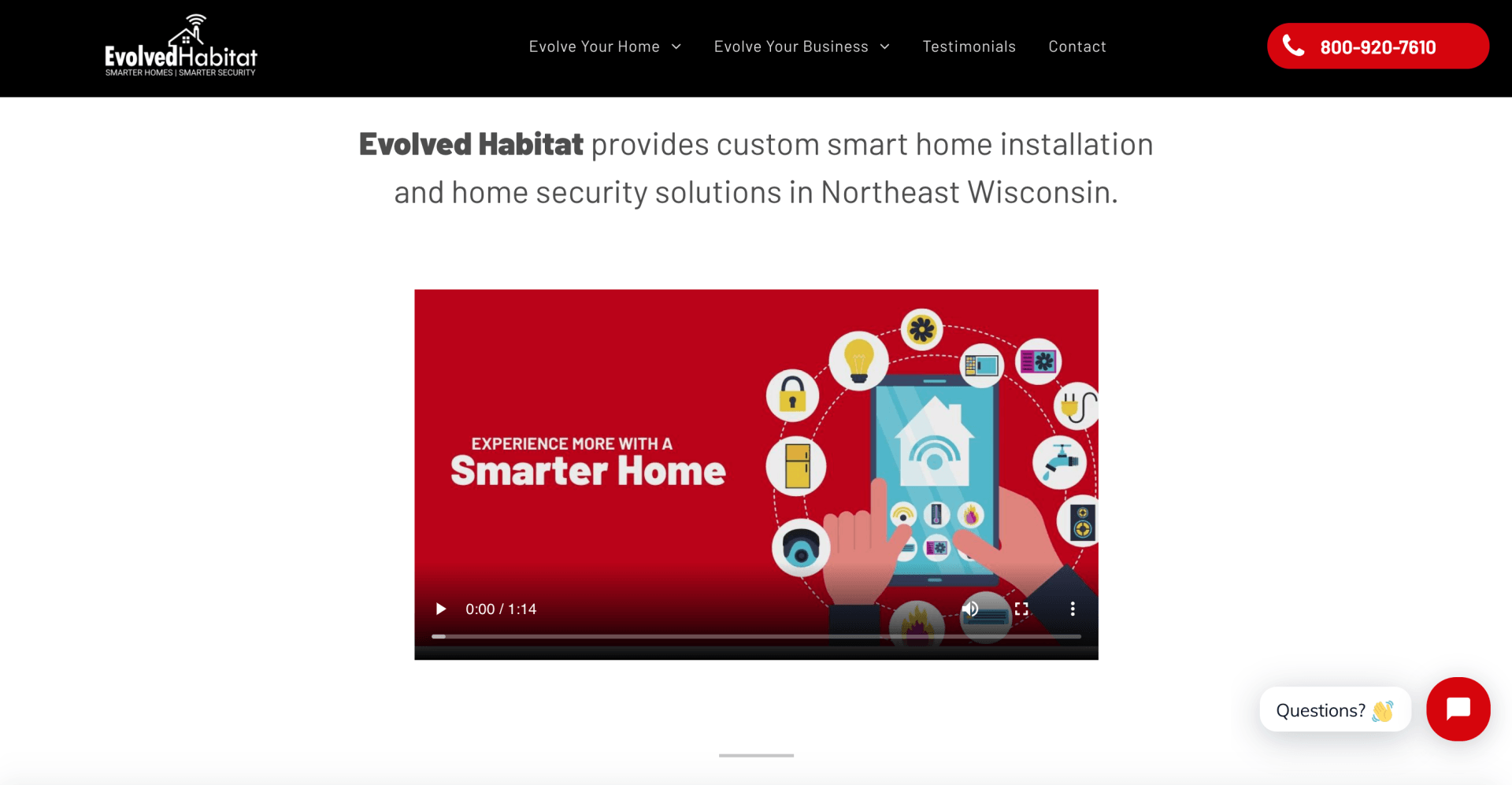
Evolved Habitat takes home comfort to the next level, offering unparalleled quality in home automation, entertainment and security to homes and businesses. The company’s motto is “Smarter Homes | Smarter Security,” but we wonder if they’ve ever considered adding “A Smarter Website” as well. The site makes a great use of video and even offers the ability to submit questions via a chat widget right on the homepage.

Credited Agency: Fredrick Media

Screenshot of the homepage of Evolved Habitat website

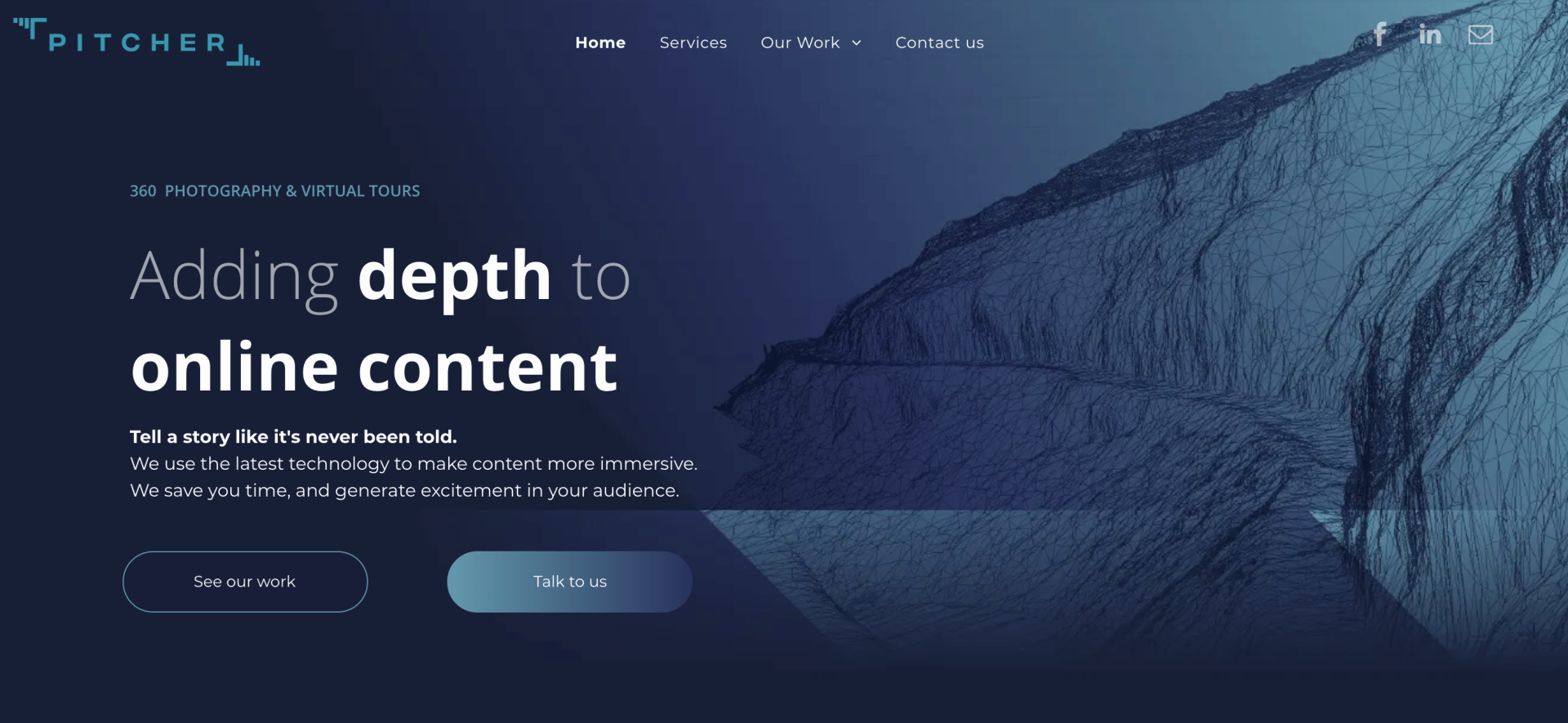
If a picture is worth a thousand words, how much is a virtual tour worth? After taking a glance at some of the examples on Pitcher’s website, we think it’s safe to assume a fair bit more than 1,000. 


Pitcher creates beautiful virtual tours for all kinds of small businesses and the ones they feature on their website provide visitors with a fantastically immersive experience. It’s not hard to see how virtual tours may one day become a mainstay of all kinds of websites.

Credited Agency: Attraction Studio


Screenshot of the homepage of Pitcher website

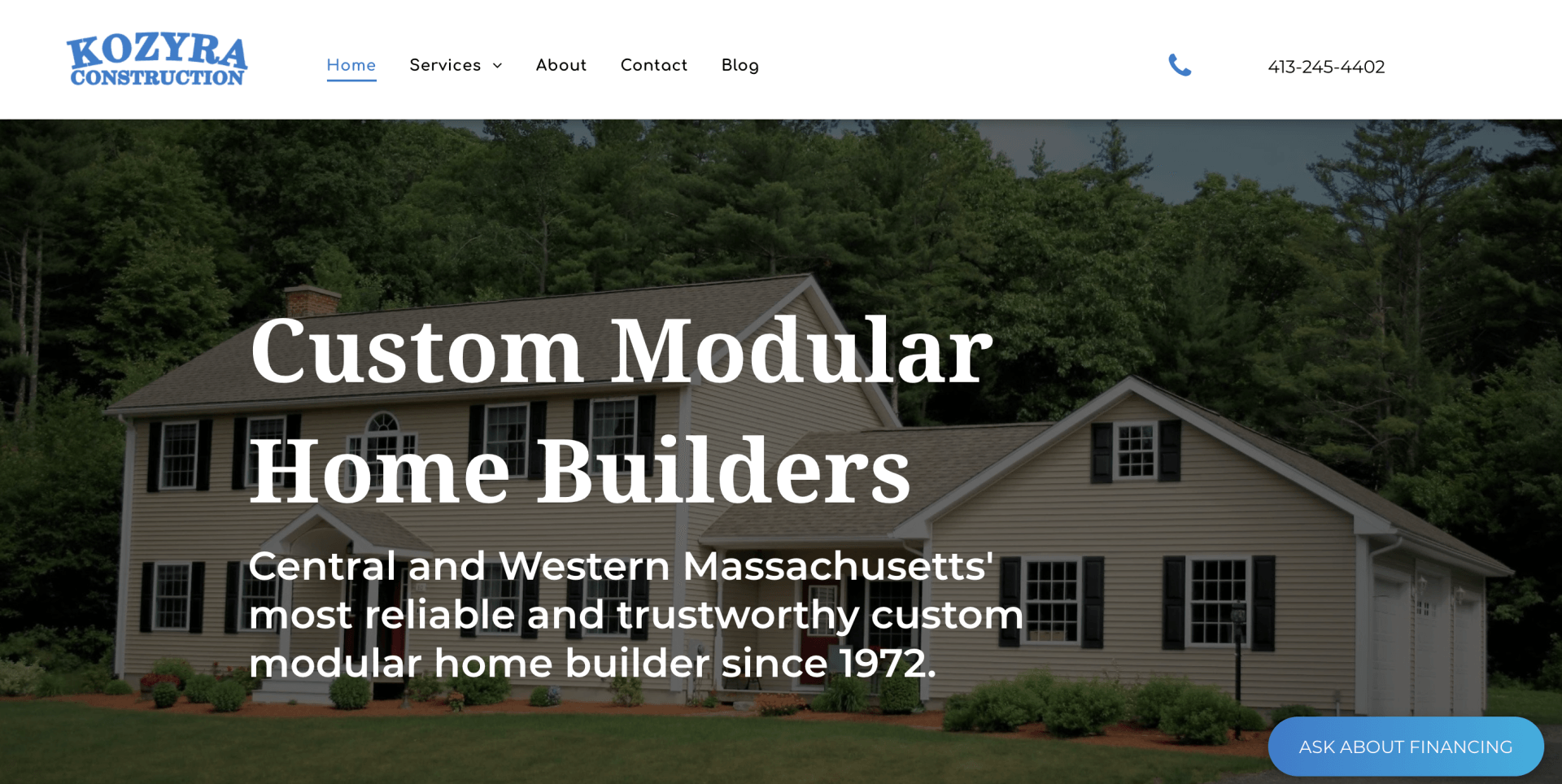
Very few people hire a construction company on a whim, and we imagine that’s why Kozyra Construction goes into each one of its services in fine detail and offers plenty of calls-to-action encouraging visitors to get in touch with questions.

Credited Agency: The Local Marketer

Screenshot of the homepage of Kozyra Construction website

MSK Masters offers both in-person and online classes and education materials on ultrasound sonography. This site provides visitors with an incredible amount of high-quality multimedia content to help them decide whether or not to enroll in a class. It’s quite a challenge to pack so much rich content into one site, but MSK Masters has done it… masterfully (we’ll see ourselves out).

Credited Agency: Weblink

Screenshot of the homepage of MSK Masters website

Nai

We’ve never had tea from Nai, but if it’s half as refreshing as their website’s design, we’re sure it’s amazing. Nai combines nearly every color in the rainbow with parallax design to deliver a fun and funky user experience that is both intriguing and delightful.

Credited Agency: Concisy

Screenshot of the homepage of Nai website

To learn more, check out these Examples of Successful Stores at Duda University.

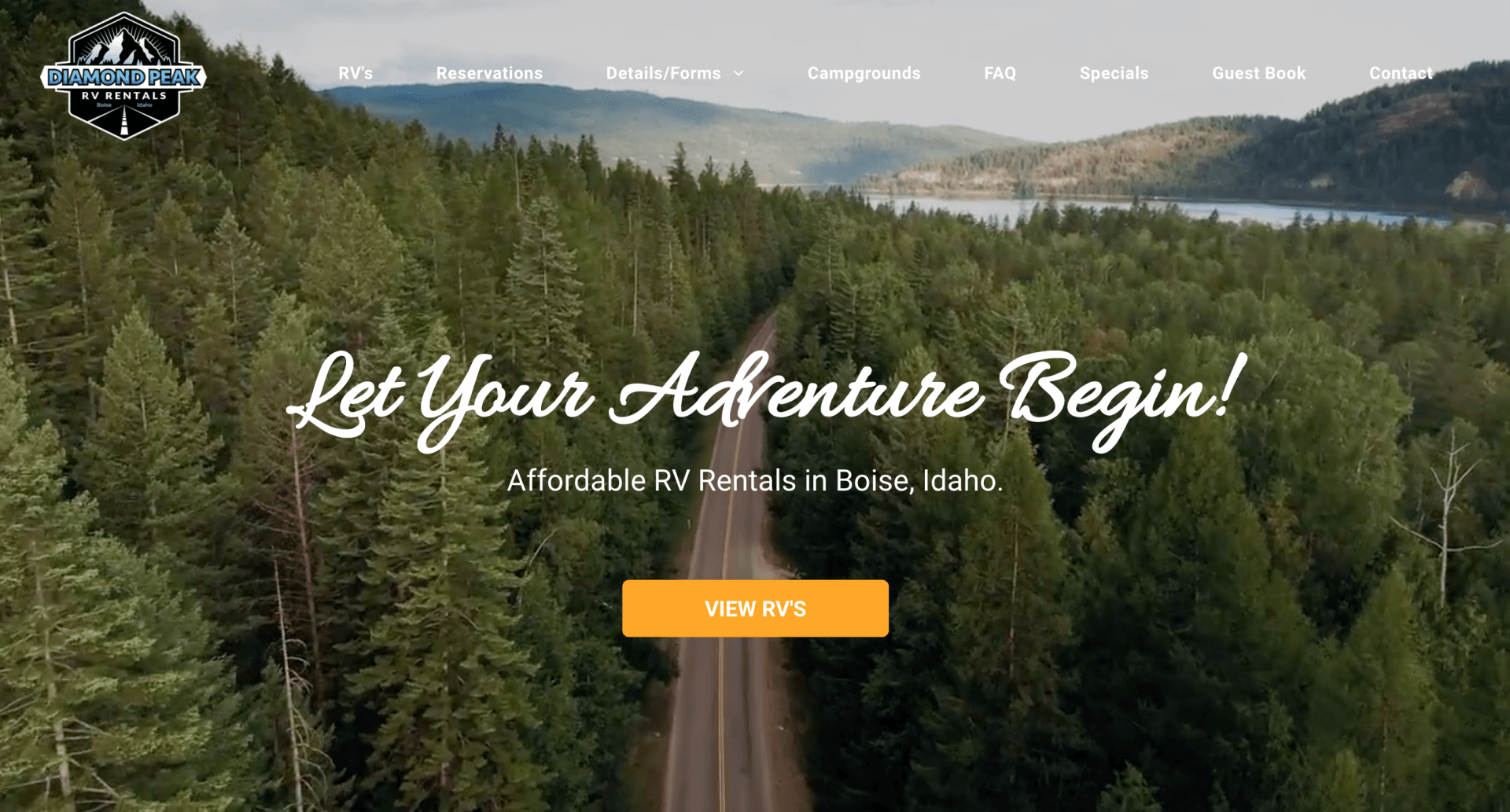
When you think of RVs, it’s more than likely campgrounds and the open road are the first things to pop into your mind’s eye. Clearly the people at Diamond Peak RV Rentals are playing on that idea by using a background video of pristine countryside right in the header. The rest of the site offers a simple, but elegant, layout that provides a site visitor with everything they need to know to plan their next vacation.

Credited Agency: Platform 513

Screenshot of the homepage of Diamond Peak RV Rentals

Patients are looking for a dental office that provides a complete solution for their needs. The Implant Center of Miami website offers patients with a realistic look and feel every piece of information related to dental implants. This information includes price, financed price, what to expect, and a beautiful design patients can see.

The Duda website editor allowed the design and content team to formulate a consistent user experience combining animations, beautiful images, and a page speed search engines love.

Credited Agency: Develomark

Screenshot of the homepage of Implant Center of Miami

More to Come!

Amazing new Duda websites are published to the web daily by the thousands of web pros that call our website builder platform their own. Stay tuned as we grow this list over the coming months!


Want your work featured on our blog? Submit your Duda websites today and they may be featured in future posts just like this one!

Recent Posts

By Duda March 10, 2026
Discover a more intuitive, professional UI with a streamlined sidebar and enhanced top navigation, helping you build faster and with greater confidence.
Graphic with
By Stephen Alemar October 23, 2025
Discover why Duda is a top-rated website builder on G2, recognized for usability, easy setup, strong relationships, and excellent results, all backed by real reviews.
By Ilana Brudo October 16, 2025
Discover why digital marketing agencies are choosing Duda over Wix Studio and WordPress for speed, reliability, and client experience, and how it helps them scale without operational overhead.
Show More

Did you find this article interesting?


Thanks for the feedback!
By Shawn Davis April 1, 2026
Core Web Vitals aren't new, Google introduced them in 2020 and made them a ranking factor in 2021. But the questions keep coming, because the metrics keep changing and the stakes keep rising. Reddit's SEO communities were still debating their impact as recently as January 2026, and for good reason: most agencies still don't have a clear, repeatable way to measure, diagnose, and fix them for clients. This guide cuts through the noise. Here's what Core Web Vitals actually measure, what good scores look like today, and how to improve them—without needing a dedicated performance engineer on every project. What Core Web Vitals measure Google evaluates three user experience signals to determine whether a page feels fast, stable, and responsive: Largest Contentful Paint (LCP) measures how long it takes for the biggest visible element on a page — usually a hero image or headline — to load. Google considers anything under 2.5 seconds good. Above 4 seconds is poor. Interaction to Next Paint (INP) replaced First Input Delay (FID) in March 2024. Where FID measures the delay before a user's first click is registered, INP tracks the full responsiveness of every interaction across the page session. A good INP score is under 200 milliseconds. Cumulative Layout Shift (CLS) measures visual stability — how much page elements unexpectedly move while content loads. A score below 0.1 is good. Higher scores signal that images, ads, or embeds are pushing content around after load, which frustrates users and tanks conversions. These three metrics are a subset of Google's broader Page Experience signals, which also include HTTPS, safe browsing, and mobile usability. Core Web Vitals are the ones you can most directly control and improve. Why your clients' scores may still be poor Core Web Vitals scores vary dramatically by platform, hosting, and how a site was built. Some of the most common culprits agencies encounter: Heavy above-the-fold content . A homepage with an autoplay video, a full-width image slider, and a chat widget loading simultaneously will fail LCP every time. The browser has to resolve all of those resources before it can paint the largest element. Unstable image dimensions . When an image loads without defined width and height attributes, the browser doesn't reserve space for it. It renders the surrounding text, then jumps it down when the image appears. That jump is CLS. Third-party scripts blocking the main thread . Analytics pixels, ad tags, and live chat tools run on the browser's main thread. When they stack up, every click and tap has to wait in line — driving INP scores up. A single slow third-party script can push an otherwise clean site into "needs improvement" territory. Too many web fonts . Each font family and weight is a separate network request. A page loading four font files before rendering any text will fail LCP, especially on mobile connections. Unoptimized images . JPEGs and PNGs served at full resolution, without compression or modern formats like WebP or AVIF, add unnecessary weight to every page load. How to measure them accurately There are two types of Core Web Vitals data you should be looking at for every client: Lab data comes from tools like Google PageSpeed Insights, Lighthouse, and WebPageTest. It simulates page loads in controlled conditions. Lab data is useful for diagnosing specific issues and testing fixes before you deploy them. Field data (also called Real User Monitoring, or RUM) comes from actual users visiting the site. Google collects this through the Chrome User Experience Report (CrUX) and surfaces it in Search Console and PageSpeed Insights. Field data is what Google actually uses as a ranking signal — and it often looks worse than lab data because it reflects real-world device and connection variability. If your client's site has enough traffic, you'll see field data in Search Console under Core Web Vitals. This is your baseline. Lab data helps you understand why the scores are what they are. For clients with low traffic who don't have enough field data to appear in CrUX, you'll be working primarily with lab scores. Set that expectation early so clients understand that improvements may not immediately show up in Search Console. Practical fixes that move the needle Fix LCP: get the hero image loading first The single most effective LCP improvement is adding fetchpriority="high" to the hero image tag. This tells the browser to prioritize that resource over everything else. If you're using a background CSS image for the hero, switch it to anelement — background images aren't discoverable by the browser's preload scanner. Also check whether your hosting serves images through a CDN with caching. Edge delivery dramatically reduces the time-to-first-byte, which feeds directly into LCP. Fix CLS: define dimensions for every media element Every image, video, and ad slot on the page needs explicit width and height attributes in the HTML. If you're using responsive CSS, you can still define the aspect ratio with aspect-ratio in CSS while leaving the actual size fluid. The key is giving the browser enough information to reserve space before the asset loads. Avoid inserting content above existing content after page load. This is common with cookie banners, sticky headers that change height, and dynamically loaded ad units. If you need to show these, anchor them to fixed positions so they don't push content around. Fix INP: reduce what's competing for the main thread Audit third-party scripts and defer or remove anything that isn't essential. Tools like WebPageTest's waterfall view or Chrome DevTools Performance panel show you exactly which scripts are blocking the main thread and for how long. Load chat widgets, analytics, and ad tags asynchronously and after the page's critical path has resolved. For most clients, moving non-essential scripts to load after the DOMContentLoaded event is a meaningful INP improvement with no visible impact on the user experience. For websites with heavy JavaScript — particularly those built on frameworks with large client-side bundles — consider breaking up long tasks into smaller chunks using the browser's Scheduler API or simply splitting components so the main thread isn't locked for more than 50 milliseconds at a stretch. What platforms handle automatically One of the practical advantages of building on a platform optimized for performance is that many of these fixes are applied by default. Duda, for example, automatically serves WebP images, lazy loads below-the-fold content, minifies CSS, and uses efficient cache policies for static assets. As of May 2025, 82% of sites built on Duda pass all three Core Web Vitals metrics — the highest recorded pass rate among major website platforms. That baseline matters when you're managing dozens or hundreds of client sites. It means you're starting each project close to or at a passing score, rather than diagnosing and patching a broken foundation. How much do Core Web Vitals actually affect rankings? Honestly, they're a tiebreaker — not a primary signal. Google has been clear that content quality and relevance still dominate ranking decisions. A well-optimized site with thin, irrelevant content won't outrank a content-rich competitor just because its CLS is 0.05. What Core Web Vitals do affect is the user experience that supports those rankings. Pages with poor LCP scores have measurably higher bounce rates. Sites with high CLS lose users mid-session. Those behavioral signals — time on page, return visits, conversions — are things search engines can observe and incorporate. The practical argument for fixing Core Web Vitals isn't just "because Google said so." It's that faster, more stable pages convert better. Every second of LCP improvement can reduce bounce rates by 15–20% depending on the industry and device mix. For client sites that monetize through leads or eCommerce, that's a revenue argument, not just an SEO argument. A repeatable process for agencies Audit every new site before launch. Run PageSpeed Insights and record LCP, INP, and CLS scores for both mobile and desktop. Flag anything in the "needs improvement" or "poor" range before the client sees the live site. Check Search Console monthly for existing clients. The Core Web Vitals report surfaces issues as they appear in field data. Catching a regression early — before it compounds — is significantly easier than explaining a traffic drop after the fact. Document what you've improved. Clients rarely see Core Web Vitals scores on their own. A monthly one-page performance summary showing before/after scores builds credibility and makes your technical work visible. Prioritize mobile. Google uses mobile-first indexing, and field data shows that mobile CWV scores are almost always worse than desktop. If you only have time to optimize one version, do mobile first. Core Web Vitals aren't a one-time fix. Platforms change, new scripts get added, campaigns bring in new widgets. Build the audit into your workflow and treat it like any other ongoing deliverable, and you'll stay ahead of the issues before they affect your clients' rankings. Duda's platform is built with Core Web Vitals performance in mind. Explore how it handles image optimization, script management, and site speed automatically — so your team spends less time debugging and more time building.
By Ilana Brudo March 31, 2026
Vertical SaaS must transition from tools to an AI-powered Vertical Operating System (vOS). Learn to leverage context, end tech sprawl, and maximize retention.
By Shawn Davis March 27, 2026
Automate client management, instant site generation, and data synchronization with an API-driven website builder to create a scalable growth engine for your SaaS platform.
Show More

Latest posts