Influencer marketing has become one of the best ways brands can build social proof in order to promote their products and services online.
This gives brands a strong reason to partner with influencers who truly align with their style and values to effectively convey their messages. However, for an agency, managing hundreds of creators every week can be time-consuming and negatively impact profitability.
To effectively capitalize on the benefits of influencer marketing, agencies need to invest in better infrastructure. Infrastructure that can automate the heavy lifting involved with managing client influencers, while simultaneously helping them match the right influencers to the right campaigns.
In this article, we’ll be investigating what that infrastructure might look like, by exploring the 10 best pieces of influencer marketing software.
- Influencer Hero
- Captiv8
- Upfluence
- Modash
- Aspire
- Traackr
- GRIN
- CreatorIQ
- Sprout Social
- HypeAuditor
Evaluation criteria
Choosing the right tech stack is a massive decision for any agency. If the tool doesn't fit your workflow, then what you’re left with is little more than just expensive clutter.
Here are the five non-negotiables we look for before pulling the trigger on a new platform:
1. Intuitive workflow
A platform should save you time, not create a new full-time job. You shouldn't need a month of onboarding just to send a campaign brief. If the interface feels clunky or the learning curve is too steep, your team simply won't use it. That’s money down the drain. Instead, look for a tool that feels natural from day one.
2. Data depth and quality
Quantity matters, but quality matters more. You need a database that doesn't just give you a list of names, but, rather, provides the granular filters your agency needs to find that needle in the haystack. We look for real-time audience insights and fraud detection to ensure the creators we’re pitching to clients are actually worth the investment.
3. Pricing that scales
Don’t get locked into an enterprise contract if you’re operating with a startup budget—but don't outgrow your tool in six months, either. Be clear on your volume. Whether it’s a flat monthly fee or a "per-seat" model, make sure the cost aligns with your margins and allows you to scale as your client roster grows.
4. Seamless eCommerce synchronization
Influencer marketing is no longer just a "brand awareness" play; it’s a performance engine. If the platform doesn’t talk to your
specific storefront, you’re making life harder than it needs to be. Native integrations allow you to track sales, manage giftings, and pull ROI data without the manual spreadsheet headache.
5. Client-ready reporting
At the end of the day, you have to prove the work. Prioritize platforms with clean, visual dashboards that make your agency look professional. You need the ability to export clear data on clicks, conversions, and revenue so you can spend less time building slides and more time optimizing your next move.
The 10 best influencer marketing software solutions
1. Influencer Hero
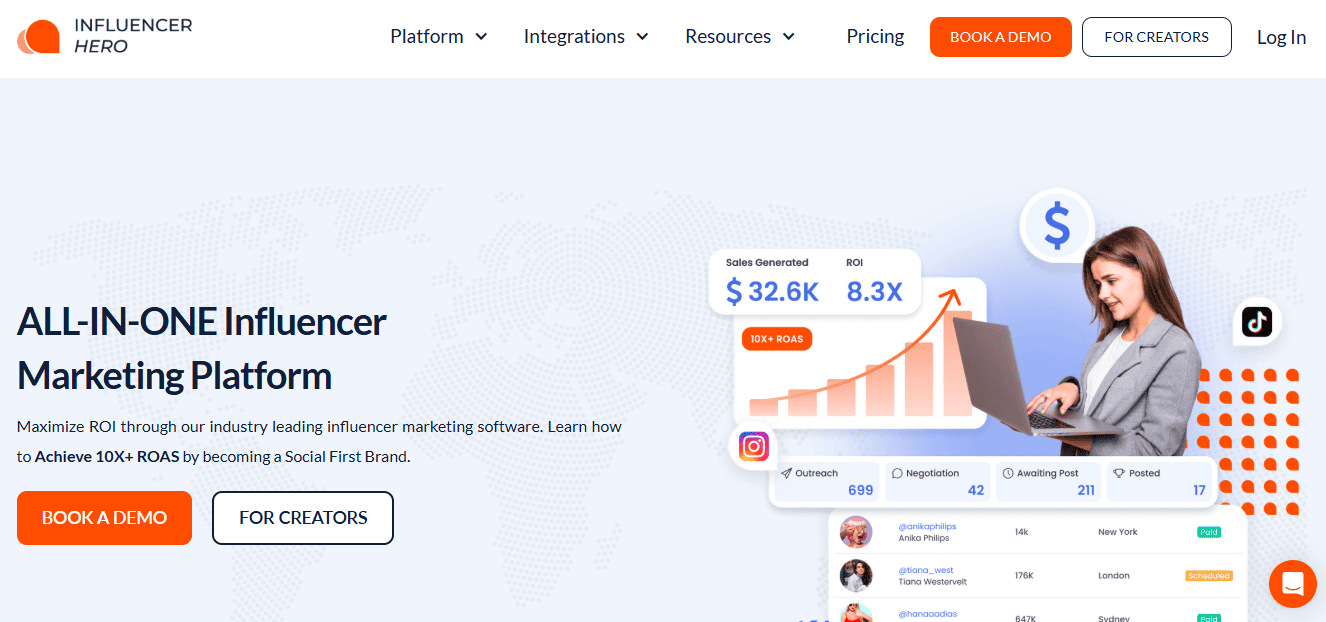
Influencer Hero is an all-in-one influencer marketing software platform, preferred by agencies seeking the best solution for managing campaigns end-to-end.
It allows agencies to find and vet influencers, run outreach at scale, manage UGC collaborations, track content and posts, and measure sales or performance—all from a single dashboard. Instead of juggling multiple tools, one account manager can oversee influencer discovery, communication, approvals, and reporting across multiple clients in one place.
This makes Influencer Hero especially useful for agencies offering fully managed influencer marketing services, where efficiency, visibility, and scalability matter.
Standout
features:
- AI-powered workflow optimization: From discovery to outreach, Influencer Hero uses AI to suggest the best creators, auto-generate messages, and even predict campaign success.
- Multi-platform integrations & automation: Influencer Hero supports more than 30 integrations across eCommerce, analytics, communication, and reporting tools. The platform also includes automation features that let agencies customize workflows—from notifications to tracking and payouts—so the software adapts to different client needs.
- Automates & personalized research: With Influencer Hero, agencies can build unique email sequences tailored to their audiences, powered by engagement and response-boosting AI suggestions.
- Influencer list tracking: Agencies can easily spot influencers already following or interacting with their client’s content, helping to prioritize the partnerships with the highest potential.
- Chrome extension for real-time insights: Check engagement rates, audience demographics, and creator growth rates as you browse
social media, then add them to your campaign with one click or tap.
- Application pages & storefronts: Launch branded signup pages and creator storefronts to scale inbound interest and track affiliate sales.
Pricing: Influencer Hero offers different plans depending on your needs.
- Standard Plan: Starts at $649/month. Allows you to contact up to 1,000 creators a month.
- Pro Plan: Starts at $1,049/month. Allows you to contact up to 5,000 creators a month.
- Business Plan: Starts at $2,490/month. Allows you to contact up to 10,000 creators a month.
- Custom & Agency: Custom pricing based on your brand needs.
Agency win: Influencer Hero is a great fit for managing creator campaigns at scale, thanks to automated and advanced tracking tools. By automating the entire funnel, from AI-powered outreach to automated product fulfillment, agencies are able to task a single account manager with what would otherwise be the work of three.
Pro tip: Use Influencer Hero’s "Automated Follow-up" sequences to maintain a high response rate for your clients without needing a dedicated outreach manager.
2. Captiv8
Captiv8 provides enterprise-grade software to run creator campaigns with confidence. This is the choice for agencies that lead with data-heavy strategies.
Standout features:
- Influencer discovery: Search through a database of over 15 million creators using advanced filters like interests, location, and safety score to maximize creator compatibility with your campaigns.
- Global brand mentions: Track mentions of your brand or competitors across various platforms, including social posts, captions, and hashtags, to identify potential influencer partnerships.
- Customizable reports: Build reports by dragging and dropping metrics, then export them directly to Looker Studio or Google Analytics for deeper analysis.
- Campaign tracking: Monitor campaign performance with detailed KPIs such as sales,
engagement, ROAS, earned media value (EMV), and more.
- Storefronts & affiliate programs: Available for enterprise-level services, allow creators to curate products and engage in affiliate marketing—with additional costs for integration.
Pricing: There are different pricing options:
- $25,000 annually (with an annual commitment only)
- $3,000 one-time onboarding fee
- $20,000-$30,000 per month for storefront + affiliate program (enterprise-level managed services)
Agency win: High-end social listening tools that allow you to track competitor sentiment and pitch "defensive" influencer strategies to your clients.
Pro tip: Use the "Velocity Index" to identify rising stars for your clients before they become mainstream (and expensive).
3. Upfluence
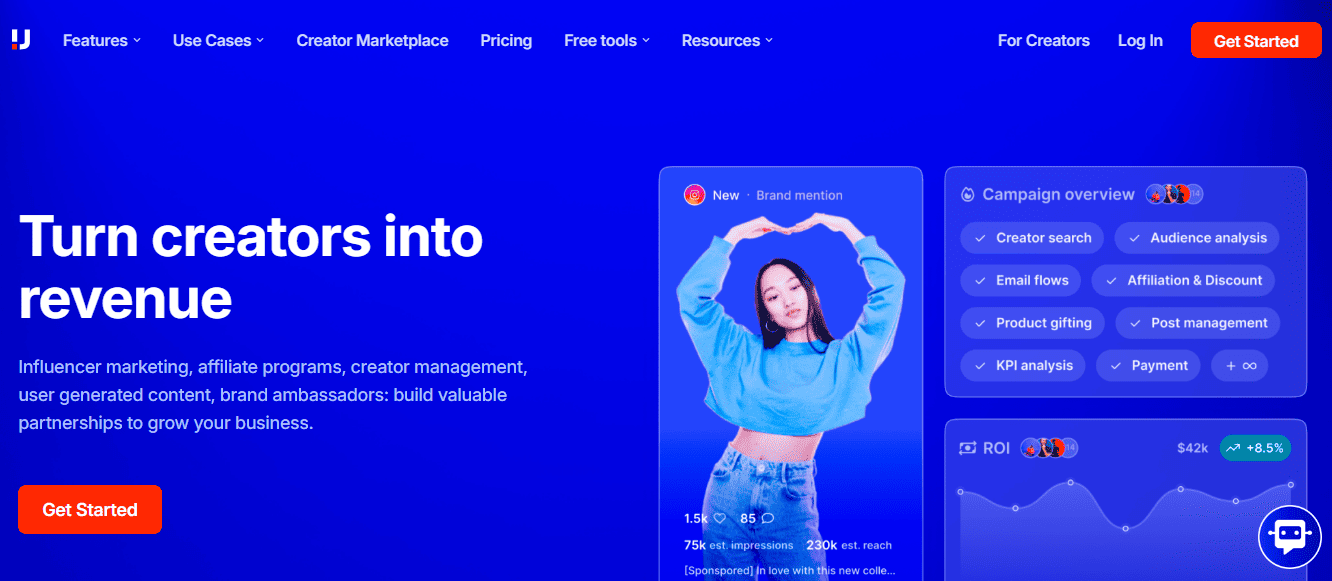
Upfluence helps you transform creators into revenue engines by building valuable partnerships that grow client businesses.
Standout features:
- Identify influencers within your customer base: Upfluence can analyze customer data to uncover which buyers are also influencers (typically 1%-3% of your list).
- Built-in social listening: With their social listening tool, Upfluence tracks conversations, emerging trends, and high performing content related to your brand or competitors—a valuable asset for research and campaign planning stages.
- Ideal for Shopify and Amazon sellers: Upfluence deeply integrates with both Shopify and Amazon, simplifying affiliate tracking while connecting creator activities with real sales performance data.
- Leverage past collabs: With Upfluence you can easily import data from creators you’ve worked with before. Their latest analytics become accessible within the platform, allowing your brand to easily re-engage them in new campaigns.
Pricing: All plans are custom made, so you pay only for what you need and nothing else. There’s a minimum full year of service you have to commit to with monthly payments. On average plans start around $2,000/month or $24,000 yearly.
Agency win: Powerful discovery filters and eCommerce integrations to track every dollar back to specific creators.
Pro tip: Install the Upfluence "Live Capture" widget on your to automatically build a database of their most influential site visitors.
4. Modash
Modash is an all-in-one influencer marketing platform designed for eCommerce brands.
Standout features:
- AI-powered creator discovery: Use different text prompts such as “aesthetic fashion influencers in the US,” or upload a reference image to get highly relevant influencer suggestions through
AI search.
- Find Your Fans feature: The platform automatically identifies creators who are already following your brand and therefore are more likely to partner with you.
- Massive creator database: Because the platform is based on public data, they hold a database of over 350M profiles. This broad number of creators can be great for global campaigns.
- Real-time campaign content tracking: Any influencer content made for your campaign is collected and analyzed live.
- Affiliate automation: Set up gifting campaigns to create discount codes, generate affiliate links, and manage payouts.
Pricing: There is a range of different plans and options.
- Essential Plan: Starts at $199/month (paid annually). Allows you to contact up to 100 creators a month.
- Performance Plan: Starts at $499/month (paid annually). Allows you to contact up to 250 creators a month.
- Enterprise Plan: Custom pricing based on your client’s needs.
Agency win: Great for start-ups and teams who seek for data accuracy and a massive database. The ability to find the "needle in a haystack." If your client needs a very specific creator, Modash finds them in seconds.
Pro tip: Use the “Lookalike” feature to find over 50 influencers who match the profile of your client’s top performing creator.
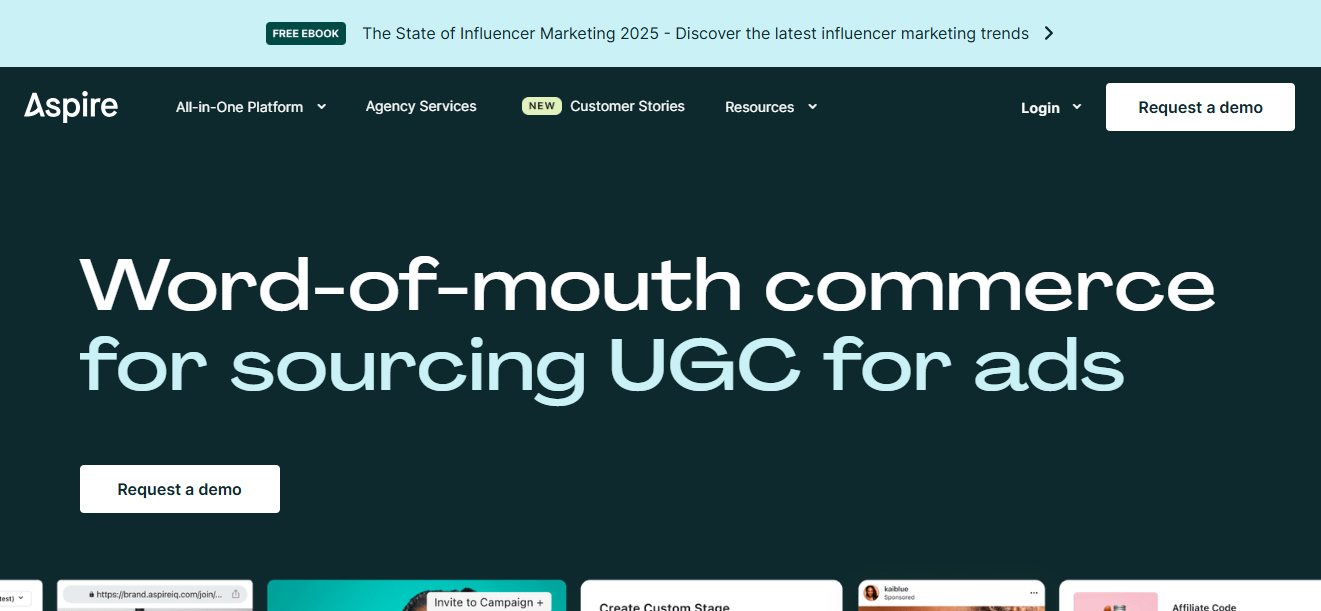
5. Aspire
Aspire is an influencer marketing platform for managing influencer campaigns, from discovery to gifting, content approvals, and sales tracking.
Standout features:
- Dual discovery model: Combine advanced creator searches with an inbound marketplace of over 1M influencers actively applying to your campaigns.
- Gifting & affiliate tools: Generate promo codes, manage gifting carts, track affiliate sales, and manage payouts all in one place.
- Comprehensive workflow & CRM: Handle everything from contracts and briefs to automated follow-ups, content approvals, and tracking.
- CreatorStores: Enable influencers to build curated storefronts featuring your products, driving more organic conversions.
- Robust UGC licensing: Built-in digital term sheets that secure reuse rights for ads or multi-channel campaigns.
Pricing: Aspire’s pricing generally works on tiered plans tailored to your brand’s needs, so costs may vary depending on your specific requirements. The Essentials Plan, for example, starts at $2,299/month on a 12-month contract, totaling $27,588 annually—plus a one-time onboarding fee of $2,000, bringing the first-year investment to $29,588.
Agency win: Aspire is a great platform for mid-size to enterprise level teams and provides an interesting model twist. Instead of spending hours messaging creators, customers receive applications, then decide whether or not to approve individual creators.
Pro tip: Repurpose high-performing influencer content into your client’s Duda-built landing pages to boost on-site conversion rates instantly.
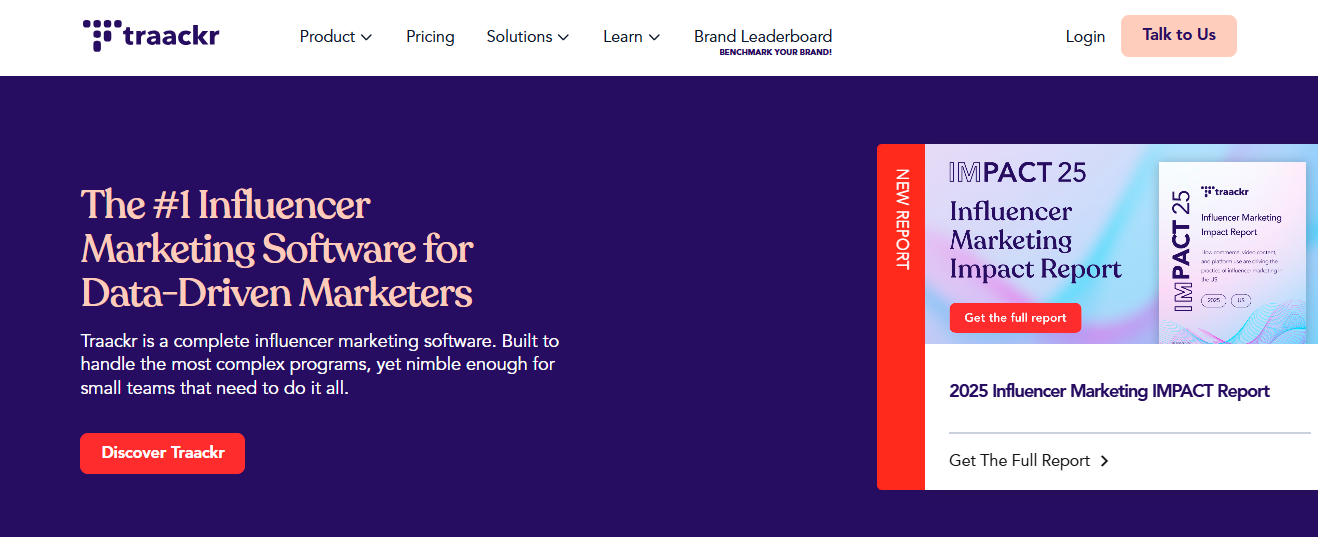
6. Traackr
Traackr is an influencer marketing platform that helps brands deliver growth with data-driven influencer insights.
Standout features:
- Brand vitality score: This unique metric blends visibility, impact, and brand trust into one score, giving you a clear view of how your brand stacks up against the competition.
- Budget calculator: Tracckr includes a built-in calculator that helps you estimate how much to invest in each creator by analyzing their historical performance data.
- Efficiency metrics dashboard: Evaluate cost-effectiveness with precision using key metrics like CPC, CPE, CPV, and cost per story view, giving you the insights needed to optimize influencer spend.
- Global performance benchmarking: Access industry-wide benchmarks from thousands of brands and millions of influencers to compare your campaign results by vertical, region, or format—helping teams identify gaps and growth opportunities.
Pricing: All plans are custom made, so you pay only for what you need and nothing else. Plans usually start at $32,500/year.
Agency win: The "Brand Vitality Index" (VIT) provides a standardized metric you can use to prove brand lift and share-of-voice growth to C-suite clients.
Pro tip: Use "Influencer Fee Recommendations" to ensure your agency is negotiating the most profitable rates for your clients.
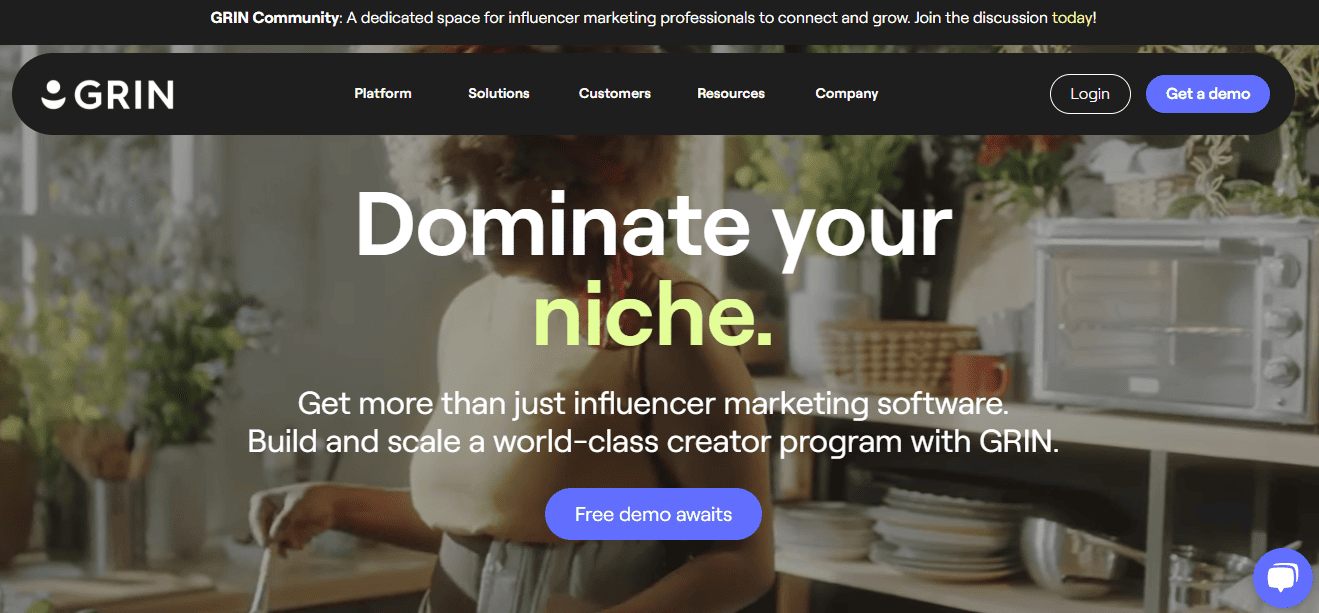
7. GRIN
GRIN is a great platform to build and scale world-class creator programs.
Standout features:
- All-in-one stack integration: GRIN seamlessly connects with tools like Klaviyo, PayPal, DocuSign, Slack, Gmail and Outlook—combining all your marketing operations into one connected platform.
- eCommerce native: GRIN is designed for brands with large product catalogs, handling everything from product seeding to sales-based commissions.
- Dedicated program support: Optional Creator Strategists can help with onboarding, execution, and campaign optimization—acting as an extension of your team.
- Creator-friendly experience: Influencers get personalized dashboards, granting access to briefs and links, as well as providing a place to upload content.
Pricing: GRIN offers different plans and pricing options, all of which require a minimum 12-month contract:
- Fixed pricing: Starts at $25,000/year (with monthly payment options available).
- Additional plans: Can cost $10,000/year or more, depending on features and volume.
Agency win: GRIN is a strong choice for eCommerce brands looking for end-to-end influencer management.
Pro tip: Use the "Relationship History" log to ensure that, when an account manager leaves your agency, new account managers have the full context of every creator conversation.
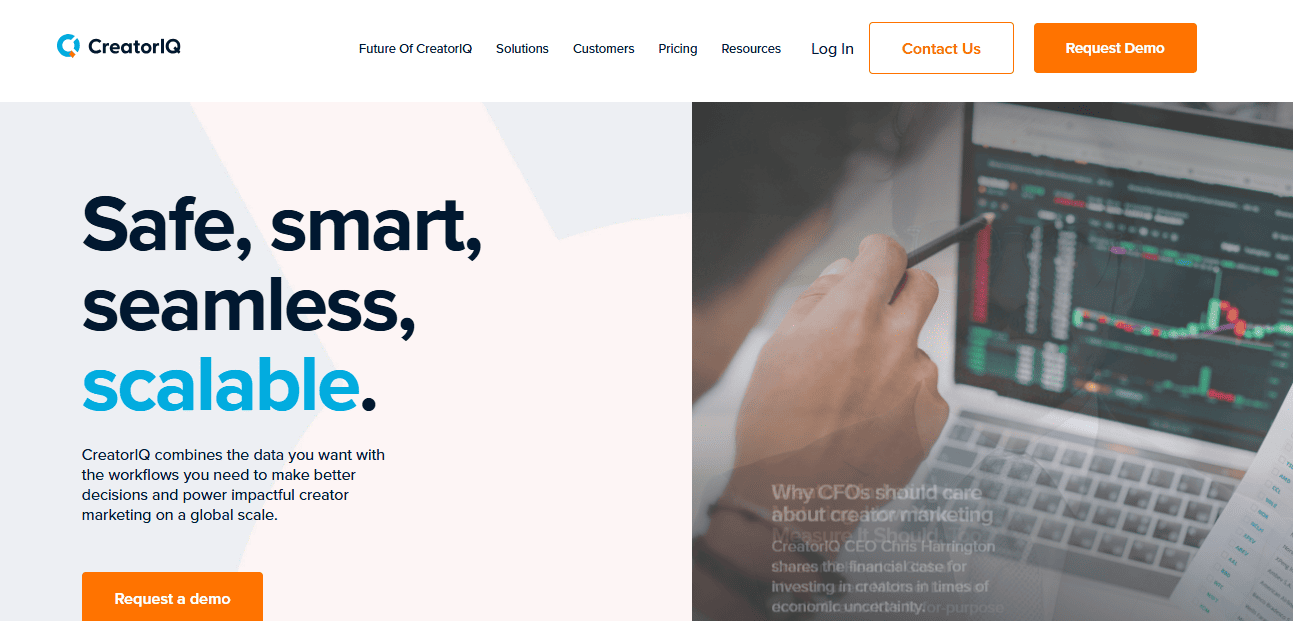
8. CreatorIQ
CreatorIQ combines enterprise workflows and data-driven insights to deliver scalable creator marketing solutions.
Standout features:
- Deep data API integrations: Get realtime API connected data from all major platforms to ensure your reports are always accurate and compliant.
- Branded one-sheets & live approvals: Review influencer profiles, check key metrics, preview content, and collect stakeholder feedback.
- Strategic support: Count on dedicated implementation managers, onboarding process and quarterly planning sessions to keep your campaigns on track.
- Integrated payment & tax compliance: Handle creator payments directly in the platform with just one click, making finances easier to manage.
Pricing: There are a range of different plans available, including:
- Basic Plan: Starts at $35,000/year. Includes 1,000 contact creators per month.
- Standard Plan: Starts at $50,000/year. Includes 2,500 contact creators per month.
- Professional Plan: Starts at $90,000/year. Includes 5,000 contact creators per month.
- Enterprise Plan: Starts at $200,000/year. Includes 7,500 contact creators per month.
Agency win: CreatorIQ gives agency owners enterprise-level visibility across dozens of client accounts, making it easy to monitor performance, budgets, and creator activity from a single dashboard.
Pro Tip: Use CreatorIQ’s historical data to build "Success Projections" during the pitch phase.
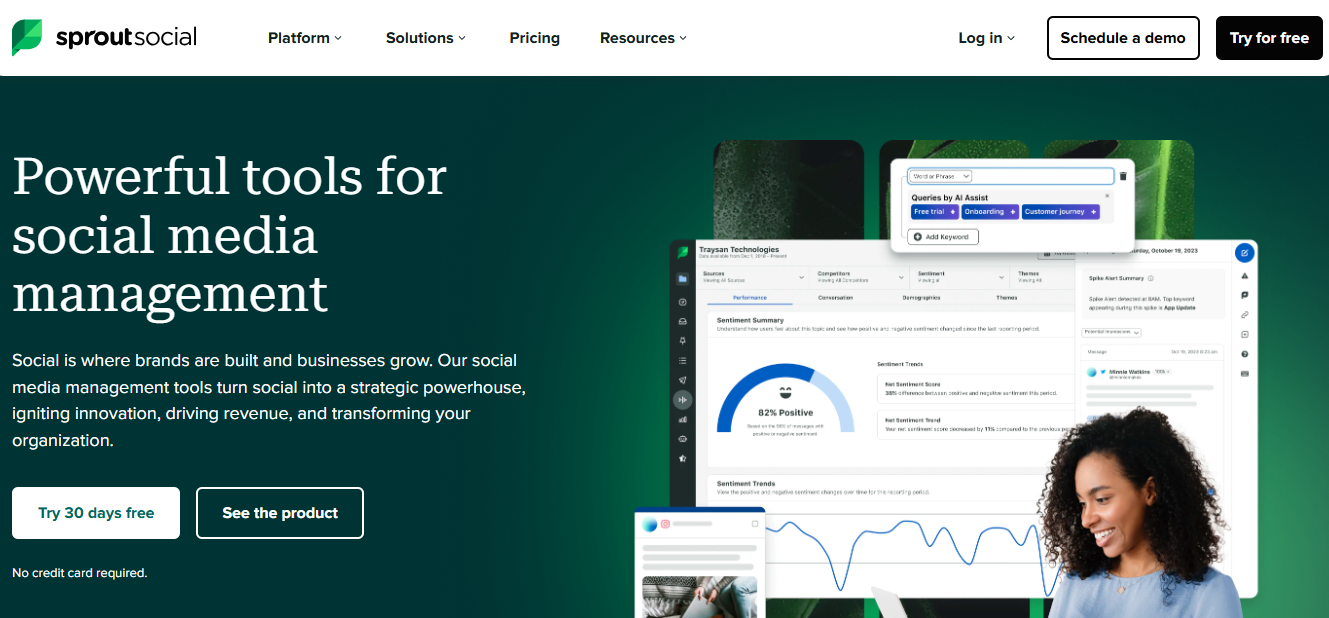
9. Sprout Social
SproutSocial (formerly Tagger) offers advanced campaign workflows, detailed analytics, and tools for outreach, gifting, and performance tracking.
Standout features:
- Advanced discovery filters: Search creators by age, region, and engagement to find precise matches.
- Brand fit & safety AI: SproutSocial affinity scores on brand alignment help brands ensure strategic selections.
- Content approval workflow: Creators submit draft content within the platform for review before posting. This gives brands final oversight before new content becomes public.
- Competitive benchmarking & EMV reporting: Customized dashboards compare campaign performance against competitors using top-tier analytics like real-time Earned Media Value (EMV), audience insights, and content approval metrics.
Pricing: Pricing varies depending on every brand's needs. The base plan, for example, starts
at
around $1,600/month per user, plus $600 per additional user. Agencies can pay monthly or annually, but a full-year commitment is mandatory. This translates into an annual investment of over $19,200 for one person or $25,200 for a team of two.
Agency win: It centralizes everything, from scheduling, listening, all the way to influencer discovery, into a single "Smart Inbox."
Pro tip: Use Sprout’s "Social Listening" tool to identify creators who are already talking about your client organically, then reach out to recruit them.
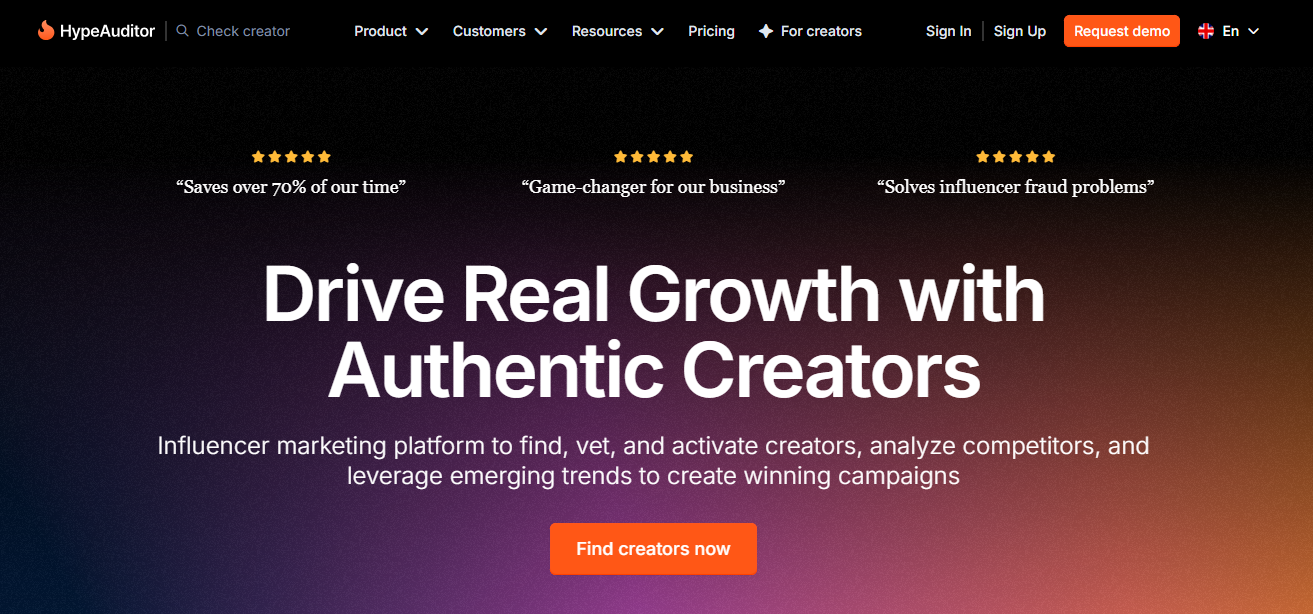
10. HypeAuditor
HypeAuditor is an influencer marketing platform designed to find, vet, and activate influencers.
Standout features:
- AI-powered discovery: The platform analyzes bios, captions, and images to accurately categorize creators.
- Social listening & competitor tracking: Discover influencers already mentioning your brand or competitors, making it easier to build real partnerships.
- Flexible campaign management: Handle everything from outreach to payments and reporting—all within the same platform, then integrate with your eCommerce store to track promo codes and sales.
- Searchable reporting: Export reports as PDFs, or share direct links with stakeholders, complete with eCommerce metrics like revenue and conversion rates by creator.
Pricing: HypeAuditor’s pricing is customizable, with the standard “Business” plan starting at around $10,000/year. Pricing can be adjusted based on the number of reports, active campaigns, and platform usage. They also offer a 24–48 hour free trial for new users.
Agency win: Very useful if your client cares deeply about transparency, audience authenticity, and fraud detection.
Pro tip: Always include the "Audience Quality Score" (AQS) in your client pitches to justify why you chose specific (and perhaps more expensive) creators.
Final thoughts
Influencer marketing has become one of the most, well, influential marketing strategies among agencies and brands alike across the globe.
It doesn’t matter if you are working with a small, medium, or massive brand. Adopting the right influencer marketing software for your agency unlocks new growth potential for you and your clients.
There’s no right software for everyone. Just like with influencers themselves, agencies need to figure out their own goals, then go with the right fit for their workflows.