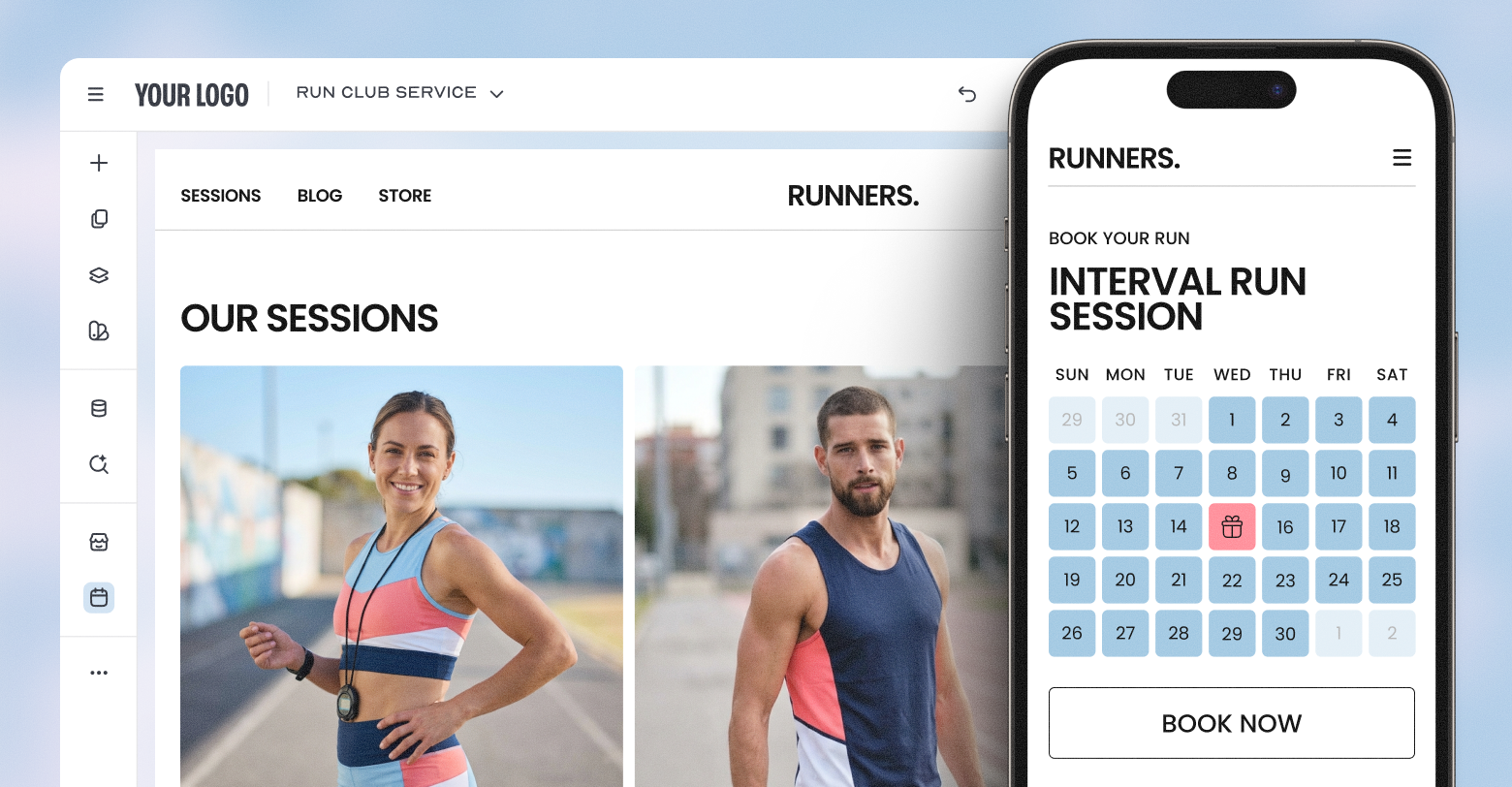
Most agencies and web professionals recognize that
online bookings are one of the most powerful features you can add to a website to drive new and ongoing business.
They reduce friction, capture high-intent visitors, and turn websites into
active revenue channels instead of digital brochures.
However, small and medium-sized businesses don’t just wake up one day and ask for a booking widget. After all, the less they have to think about their websites, the better—it’s why they have you. But, of course, this creates an opportunity for agencies to present bookings as a practical, meaningful business upgrade—and package it in ways that feel low-risk and high-value.
With Duda currently offering free access to its booking widget until August 16, 2026, agencies have a rare window to introduce booking-enabled websites at scale, remove hesitation related to pricing, and establish bookings as a standard part of their client offering.
Below are proven ways agencies can upsell bookings effectively, without turning the conversation into a hard sell.
1. Lead with outcomes, not functionality
Clients don’t care about widgets. They care about results. Instead of positioning bookings as “online scheduling,” frame it around specific business outcomes:
- Fewer missed leads
- Faster conversion from website visits
- Fewer back-and-forth emails
- More predictable appointment flow
A simple shift in language changes the conversation. Compare:
“We can add a booking widget to your site.”
Versus:
“We can help your website convert visitors into confirmed appointments—automatically, 24/7.”
When bookings are positioned as a revenue and efficiency tool, the value becomes easier to grasp, especially for service-based SMBs.
2. Offer bookings as a free trial, not a permanent commitment
One of the biggest blockers for SMB adoption is uncertainty. How do you convince a small business owner with a limited budget that a booking widget is worth it? That’s where the power of a free trial comes in.
With free access through August 16, 2026, agencies can confidently say:
- “Let’s test this with real customers.”
- “We’ll review bookings data after 60 or 90 days.”
- “If it doesn’t deliver value, we can remove it.”
This reframes the decision from buying software to running an experiment. Clients are far more likely to say yes when the risk feels contained.
Agencies can also define clear success metrics upfront:
- Number of appointments booked
- Reduction in manual scheduling
- Conversion rate from key web pages
This way, Duda’s booking tool becomes measurable, not abstract.
3. Bundle bookings into website packages
Another effective strategy is to stop selling bookings as a standalone add-on and instead package it into your website tiers.
For example:
Starter Website
- 10 core pages
- Search engine & AI search optimization
- Basic contact form
Growth Website
- Everything above
- Online bookings
- Site editing access
Premium Website
- Everything above
- eCommerce
- Booking performance reporting
- Ongoing conversion optimization
By bundling bookings into higher-tier packages, agencies increase average deal size while giving clients a clear upgrade path tied to growth instead of features.
This approach also positions bookings as a natural evolution of the website, rather than an optional extra.
4. Use bookings as a differentiator in competitive pitches
Many SMBs are comparing agencies on price and design alone. Booking-enabled websites give agencies a concrete differentiator.
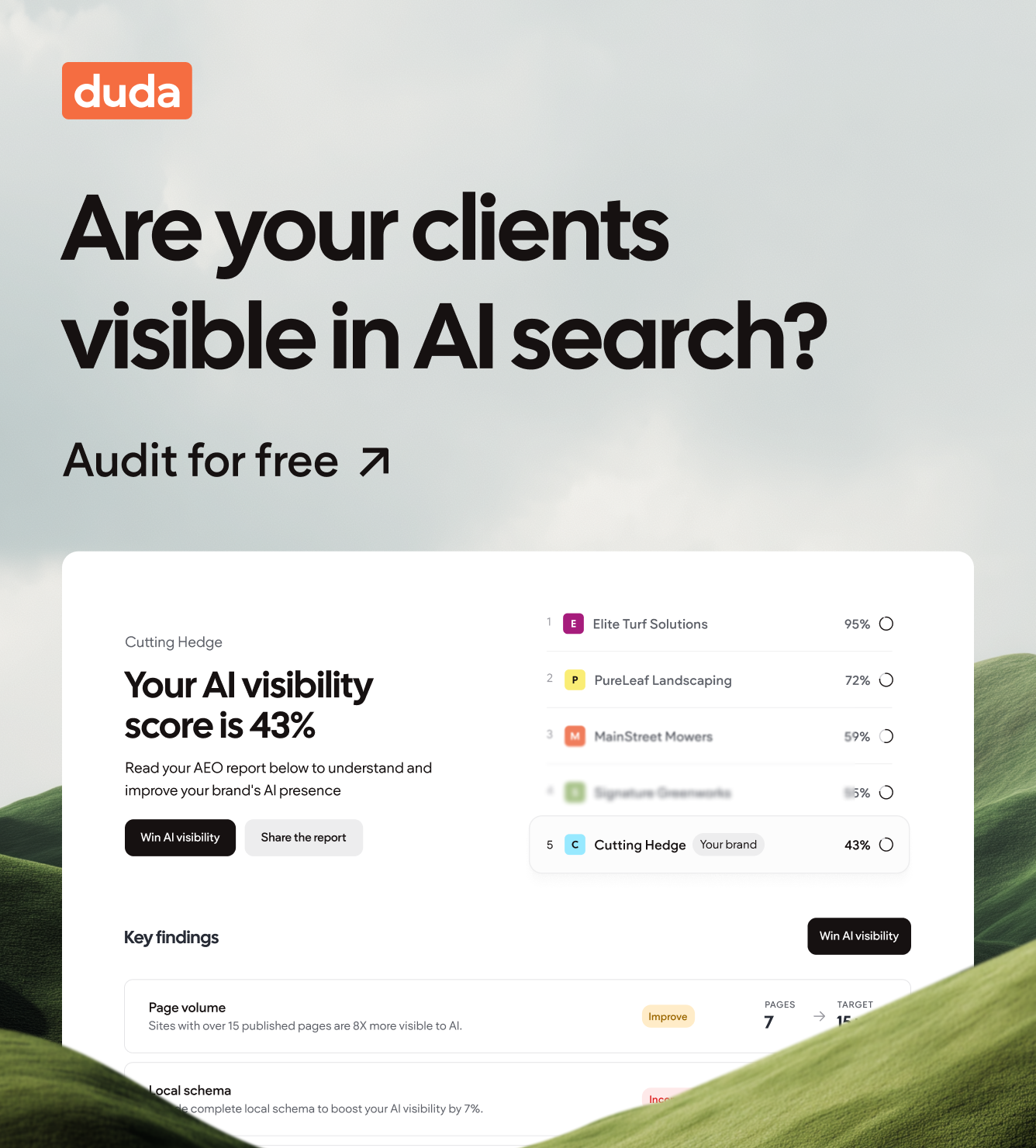
In competitive bids, that difference matters. Especially as AI-powered search and
zero-click results reduce the amount of traffic reaching SMB websites, the sites that do get visits need to convert efficiently.
Bookings give agencies a practical answer to the question: What does this website actually do for my business?
5. Position bookings as an upgrade in operational efficiency
For many SMBs, the major pain point of concern is the idea that they might have to intensively manage and monitor their booking widget.
Missed calls, double bookings, manual calendar updates, and no-shows can all add friction behind the scenes. Agencies can reframe bookings as an operational improvement, not just a marketing tool.
Key talking points in your pitch might include:
- Centralized appointment management
- Automatic confirmations and reminders
- Calendar sync to reduce errors
- Less admin time spent scheduling
This resonates strongly with owners who are already stretched thin. You’re not selling technology, you’re selling time back.
6. Make bookings an easy yes by handling the setup
Another adoption blocker is perceived effort.
Agencies that position bookings as “something we’ll fully handle” remove yet another barrier.
That includes:
- Setting up services and availability
- Matching the booking experience to the site’s design
- Testing the flow end-to-end
- Training the client on usage
With Duda’s native booking widget, the design and deployment effort is minimal, making it realistic for agencies to standardize bookings across multiple client sites without adding ongoing support overhead.
7. Use data to justify ongoing value
Once bookings are live, agencies gain access to something far more valuable than a feature: data.
Bookings data enables conversations about:
- Which services are most in demand
- Which pages drive the most appointments
- Peak booking times
- Drop-off points in the booking flow
This data supports ongoing services like:
- Conversion optimization
- Marketing campaign refinement
- Service pricing adjustments
- Reporting that clearly ties website performance to business outcomes
When agencies can say, “Your website generated 42 booked appointments last month,” the value of the relationship becomes undeniable.
Why now is the right time to introduce bookings
The free access to Duda Bookings until August 16, 2026 removes the most common objection agencies face, which is (of course) cost.
There’s no upfront software expense, no long-term commitment, and no reason not to test bookings with the right clients. For agencies, this creates an ideal moment to:
- Standardize bookings across new builds
- Revisit existing client sites with a clear value-add
- Increase package value without increasing client risk
Most importantly, it helps agencies shift the client conversation from deliverables to outcomes—from websites as projects to websites as growth tools.
Conclusion
Upselling bookings doesn’t require aggressive sales tactics. It requires better positioning.
Recommended ways to frame Duda bookings include:
- Lead with business outcomes
- Reduce risk through trials
- Package bookings strategically
- Handle setup and optimization
- Use data to prove value
For service-based SMBs, the ability for customers to book the moment they’re ready is critically important. For agencies, helping clients unlock that moment is one of the simplest ways to deliver measurable ROI—and to stand out in an increasingly crowded market.
With
Duda Bookings available to try for free between now and August 31, 2026, there’s never been a better time to make higher-converting sites the standard—not the exception.