3 Agency Owners Journey to Success | IWD Edition

March 8, 2022
0 minute read

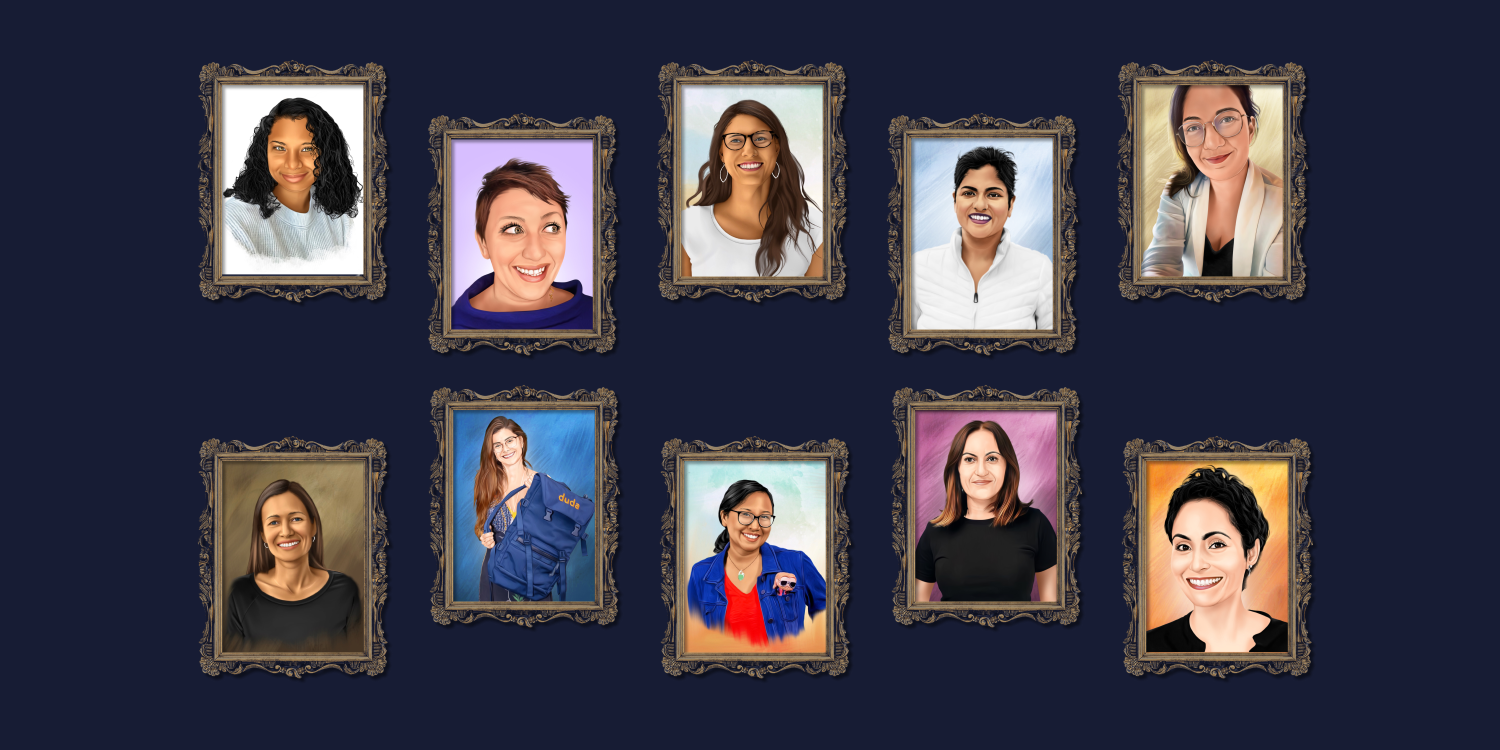
International Women’s Day (IWD) is the perfect opportunity to celebrate successful women in the digital marketing and web design industry. To mark this day, we reached out to a few inspiring women we know (through their agencies’ work with Duda), to provide their thoughts on a number of topics regarding their success. 


We are honored to highlight these three awesome, independent women here and present their answers. Read their responses below.

"Everyone is just totally winging it." - Cassy Amelia, Founder, Ethos

1. How did you get started in the industry?


I studied art and graphic design at college, and part of a Fashion Atelier degree at UCA, then eventually progressed into teaching myself how to build websites because I had an idea I wanted to pursue. I then found myself in a marketing department, designing and managing websites for a company that used a very outdated design platform - so after convincing them we needed to move, we
literally tried every alternative out there until deciding to migrate and rebuild nearly 200 websites over to Duda. Then, a few years later, Covid-19 hit, and I moved across the country (Kent to Cornwall) and started Ethos.

2. Who’s a female hero of yours? How does she inspire you?


My mum, Cheryl. Single parent to me and my sister, she worked full time whilst she earned her degree and became a teacher. She’s been my confidant and the greatest support of my life, who always encouraged me to experiment and explore and never judged me for changing paths along the way.

3. What advice would you give to women just getting started in digital marketing or web design?


Just keep chipping away. Have something you want to achieve and figure it out as you go. Forget about all the distractions. As amazing as all the information is out there, try not to go down the rabbit hole
too much - it's easy to get overwhelmed and distracted by it (got the T-shirt). The best learning is by diving in and just doing. Release needing everything to be perfect too - you can grow as you go!

4. What’s the best career advice that’s been given to you?


"Everyone is just totally winging it." As long as you have honesty and integrity in what you do, try not to get lost comparing yourself to others all the time. This is why I’ve decided not to be on Instagram, I figured you don’t HAVE to do what everyone else is doing. If something doesn’t resonate, trust that and do it your own way.


5. What’s a proud moment from your career?

Working for myself and how happy it made me along with how much my creativity expanded. I love helping people put their ideas out into the world!  I also started a blog (zerowasted.co.uk) alongside Ethos and reaching my first 5k views a month just from organic traffic made me realize you don’t need to have all the bells and whistles in place to get started. Just quality content that you love creating is KEY. Hands down it's the single best thing you can do for your SEO.

“… don’t try to be a man in a man’s world. Be a woman, and bring your ‘woman’ skills to the table” - Kirsty Dove, Owner & Creative Director, The Caper  

1. How did you get started in the industry?

I was in IT for 20 years living the corporate dream. I was managing the IT department of a London private bank, and traveling to New York a couple of times a year to catch up with my colleagues there. But I was good at art… that part of me needed attention, so I started going to night classes learning Photoshop and Dreamweaver (showing my age ). 

Then there was a husband, a baby, and a move to New Zealand, and priorities changed. So building websites on the side became the main gig, and with my art background and technical skills, it was a great match. And things just grew from there. More websites, more services, more people… and working with people directly to help build their businesses fills my cup. Happy days…


2. Who’s a female hero of yours? How does she inspire you?


I have a short memory for these things… but my latest is Margaret Atwood, the author. At 82, she has more than earned the right to lock herself away in an ivory tower, but she keeps jumping into the mud. She is impassioned, fearlessly stands up for her beliefs, and has an uncanny futurist view. And most importantly, she shows critical thinking and will listen to all sides and still argue her point, and ask questions with genuine curiosity.


She is top of my dinner party ‘wish list’ at the mo!

 3. What advice would you give to women just getting started in digital marketing or web design?


Be courageous. Be curious. Know your strengths and use them in the best way possible for your customers and your business.

4. What’s the best career advice that’s been given to you?


I was the head of IT in a private bank in London for a few years, and when I was called in to say I had the job, my new boss gave me some words of wisdom that I will never forget.

“… don’t try to be a man in a man’s world.  Be a woman, and bring your ‘woman’ skills to the table”. Of course, I ignored him, and tried to be ‘the man’.

The wisdom was lost on that version of me, but it came out to play in the older and wiser version. A story for another day


5. What’s a proud moment from your career? 


Being made head of IT at a private London bank at 31, but to be honest, as cheesy as it sounds, every time I present a client with their website and they love it so much they gush, it’s a rush.
And when I am talking to clients and we delve into their ‘why’, sometimes there is this moment when they realize what they want, what they want to be, or what they want their business to be. Their eyes light up, eyebrows shoot up, and there is this smile… OMG magic moments!

“Approach everything you do with your whole heart and soul.” - Margherite LaMorte, Co-founder, Marjella LLC 

1. How did you get started in the industry?

We [Margherite and her sisters and partners, Maria LaMorte-Wright, and Angela LaMorte] always talked about working together to create a family business. The pandemic made us realize that life is short and we should be living our dreams. 


At the time, Maria was running a managed services IT company, I was
operating an e-commerce store and Angela was figuring out her next move. The thing we kept hearing in our respective businesses was how hard it was for a small business to find an affordable, high-quality web designer that they could trust. 

Over and over we heard the stories of how they’ve been let down or were charged exorbitant prices for low-quality work. So we combined our superpower skills of tech, marketing, and administration and set out to create a better business model. We were pleasantly surprised by how quickly we could get up and running working with Duda.

Fun fact: Our business name is a blend of all our names MARia + MARgherite + anGELA.


2. Who’s a female hero of yours? How does she inspire you?

There are so many women that inspire us on a global level, but the one that’s nearest and dearest to our heart is our mom. We come from a long history of kick-ass women who overcame great personal odds. 


Our Nonna on our dad’s side was one of the first female entrepreneurs of our family. She delivered goats’ milk in her small village every morning at 5 am to make a living for her family. Our Nonna on our mom’s side lost her husband in WW2 and raised 3 small children – our mom was just 9 months – on her own while working as a day laborer harvesting crops.
When we immigrated to the USA from Italy, our mom left everything behind –- family, house, everything – in order to make a better life for her kids. She didn’t know a word of English but taught herself by watching Sesame Street. And she was so clever with finances. On our dad’s small salary, she was able to buy a house and send all of us to private school.


Seeing her take chances and get out of her comfort zone has inspired all of us to go out into the world with the knowledge that we can do anything we set our minds to. 


3. What advice would you give to women just getting started in digital marketing or web design? 

  • It’s a great industry, with lots of potential and areas of focus. 
  • Keep learning – the industry moves quickly. What was relevant a year/month/day ago may not be today.
  • Human relationships are important, it’s easy to forget that sitting behind a screen.
  • Don’t be afraid to ask for help – join a community of like-minded people and lean on others.

 4. What’s the best career advice that’s been given to you? 

Collectively, we’ve all had high-stress ‘corporate’ jobs. The best advice we’ve gotten really applies to living a purposeful life, above and beyond ‘work’, and that is to approach everything you do with your whole heart and soul.


5. What’s a proud moment from your career?

From our agency standpoint, it was signing our first client right away and validating that we had a good business model.

The Women of Duda

In addition to the women presented above, keep an eye out for our magnificent celebration of the women of Duda. This International Women’s Day we’ll be featuring on our social channels Duda female employees that really shine, and share their thoughts and inspirations. 


Our social channels:
Facebook, Twitter, LinkedIn, Instagram


Did you find this article interesting?


Thanks for the feedback!
By Shawn Davis April 1, 2026
Core Web Vitals aren't new, Google introduced them in 2020 and made them a ranking factor in 2021. But the questions keep coming, because the metrics keep changing and the stakes keep rising. Reddit's SEO communities were still debating their impact as recently as January 2026, and for good reason: most agencies still don't have a clear, repeatable way to measure, diagnose, and fix them for clients. This guide cuts through the noise. Here's what Core Web Vitals actually measure, what good scores look like today, and how to improve them—without needing a dedicated performance engineer on every project. What Core Web Vitals measure Google evaluates three user experience signals to determine whether a page feels fast, stable, and responsive: Largest Contentful Paint (LCP) measures how long it takes for the biggest visible element on a page — usually a hero image or headline — to load. Google considers anything under 2.5 seconds good. Above 4 seconds is poor. Interaction to Next Paint (INP) replaced First Input Delay (FID) in March 2024. Where FID measures the delay before a user's first click is registered, INP tracks the full responsiveness of every interaction across the page session. A good INP score is under 200 milliseconds. Cumulative Layout Shift (CLS) measures visual stability — how much page elements unexpectedly move while content loads. A score below 0.1 is good. Higher scores signal that images, ads, or embeds are pushing content around after load, which frustrates users and tanks conversions. These three metrics are a subset of Google's broader Page Experience signals, which also include HTTPS, safe browsing, and mobile usability. Core Web Vitals are the ones you can most directly control and improve. Why your clients' scores may still be poor Core Web Vitals scores vary dramatically by platform, hosting, and how a site was built. Some of the most common culprits agencies encounter: Heavy above-the-fold content . A homepage with an autoplay video, a full-width image slider, and a chat widget loading simultaneously will fail LCP every time. The browser has to resolve all of those resources before it can paint the largest element. Unstable image dimensions . When an image loads without defined width and height attributes, the browser doesn't reserve space for it. It renders the surrounding text, then jumps it down when the image appears. That jump is CLS. Third-party scripts blocking the main thread . Analytics pixels, ad tags, and live chat tools run on the browser's main thread. When they stack up, every click and tap has to wait in line — driving INP scores up. A single slow third-party script can push an otherwise clean site into "needs improvement" territory. Too many web fonts . Each font family and weight is a separate network request. A page loading four font files before rendering any text will fail LCP, especially on mobile connections. Unoptimized images . JPEGs and PNGs served at full resolution, without compression or modern formats like WebP or AVIF, add unnecessary weight to every page load. How to measure them accurately There are two types of Core Web Vitals data you should be looking at for every client: Lab data comes from tools like Google PageSpeed Insights, Lighthouse, and WebPageTest. It simulates page loads in controlled conditions. Lab data is useful for diagnosing specific issues and testing fixes before you deploy them. Field data (also called Real User Monitoring, or RUM) comes from actual users visiting the site. Google collects this through the Chrome User Experience Report (CrUX) and surfaces it in Search Console and PageSpeed Insights. Field data is what Google actually uses as a ranking signal — and it often looks worse than lab data because it reflects real-world device and connection variability. If your client's site has enough traffic, you'll see field data in Search Console under Core Web Vitals. This is your baseline. Lab data helps you understand why the scores are what they are. For clients with low traffic who don't have enough field data to appear in CrUX, you'll be working primarily with lab scores. Set that expectation early so clients understand that improvements may not immediately show up in Search Console. Practical fixes that move the needle Fix LCP: get the hero image loading first The single most effective LCP improvement is adding fetchpriority="high" to the hero image tag. This tells the browser to prioritize that resource over everything else. If you're using a background CSS image for the hero, switch it to anelement — background images aren't discoverable by the browser's preload scanner. Also check whether your hosting serves images through a CDN with caching. Edge delivery dramatically reduces the time-to-first-byte, which feeds directly into LCP. Fix CLS: define dimensions for every media element Every image, video, and ad slot on the page needs explicit width and height attributes in the HTML. If you're using responsive CSS, you can still define the aspect ratio with aspect-ratio in CSS while leaving the actual size fluid. The key is giving the browser enough information to reserve space before the asset loads. Avoid inserting content above existing content after page load. This is common with cookie banners, sticky headers that change height, and dynamically loaded ad units. If you need to show these, anchor them to fixed positions so they don't push content around. Fix INP: reduce what's competing for the main thread Audit third-party scripts and defer or remove anything that isn't essential. Tools like WebPageTest's waterfall view or Chrome DevTools Performance panel show you exactly which scripts are blocking the main thread and for how long. Load chat widgets, analytics, and ad tags asynchronously and after the page's critical path has resolved. For most clients, moving non-essential scripts to load after the DOMContentLoaded event is a meaningful INP improvement with no visible impact on the user experience. For websites with heavy JavaScript — particularly those built on frameworks with large client-side bundles — consider breaking up long tasks into smaller chunks using the browser's Scheduler API or simply splitting components so the main thread isn't locked for more than 50 milliseconds at a stretch. What platforms handle automatically One of the practical advantages of building on a platform optimized for performance is that many of these fixes are applied by default. Duda, for example, automatically serves WebP images, lazy loads below-the-fold content, minifies CSS, and uses efficient cache policies for static assets. As of May 2025, 82% of sites built on Duda pass all three Core Web Vitals metrics — the highest recorded pass rate among major website platforms. That baseline matters when you're managing dozens or hundreds of client sites. It means you're starting each project close to or at a passing score, rather than diagnosing and patching a broken foundation. How much do Core Web Vitals actually affect rankings? Honestly, they're a tiebreaker — not a primary signal. Google has been clear that content quality and relevance still dominate ranking decisions. A well-optimized site with thin, irrelevant content won't outrank a content-rich competitor just because its CLS is 0.05. What Core Web Vitals do affect is the user experience that supports those rankings. Pages with poor LCP scores have measurably higher bounce rates. Sites with high CLS lose users mid-session. Those behavioral signals — time on page, return visits, conversions — are things search engines can observe and incorporate. The practical argument for fixing Core Web Vitals isn't just "because Google said so." It's that faster, more stable pages convert better. Every second of LCP improvement can reduce bounce rates by 15–20% depending on the industry and device mix. For client sites that monetize through leads or eCommerce, that's a revenue argument, not just an SEO argument. A repeatable process for agencies Audit every new site before launch. Run PageSpeed Insights and record LCP, INP, and CLS scores for both mobile and desktop. Flag anything in the "needs improvement" or "poor" range before the client sees the live site. Check Search Console monthly for existing clients. The Core Web Vitals report surfaces issues as they appear in field data. Catching a regression early — before it compounds — is significantly easier than explaining a traffic drop after the fact. Document what you've improved. Clients rarely see Core Web Vitals scores on their own. A monthly one-page performance summary showing before/after scores builds credibility and makes your technical work visible. Prioritize mobile. Google uses mobile-first indexing, and field data shows that mobile CWV scores are almost always worse than desktop. If you only have time to optimize one version, do mobile first. Core Web Vitals aren't a one-time fix. Platforms change, new scripts get added, campaigns bring in new widgets. Build the audit into your workflow and treat it like any other ongoing deliverable, and you'll stay ahead of the issues before they affect your clients' rankings. Duda's platform is built with Core Web Vitals performance in mind. Explore how it handles image optimization, script management, and site speed automatically — so your team spends less time debugging and more time building.
By Ilana Brudo March 31, 2026
Vertical SaaS must transition from tools to an AI-powered Vertical Operating System (vOS). Learn to leverage context, end tech sprawl, and maximize retention.
By Shawn Davis March 27, 2026
Automate client management, instant site generation, and data synchronization with an API-driven website builder to create a scalable growth engine for your SaaS platform.
Show More

Latest posts