The home services industry, comprising HVAC technicians, plumbers, electricians, and landscapers, operates on a foundation of local trust and immediate need. When a homeowner faces a burst pipe or a failing furnace, they do not conduct extensive research. They search for a solution nearby and choose the provider that appears first, looks professional, and offers an effortless booking process.
For SaaS companies serving these providers, the value proposition has historically focused on internal efficiency. You offer tools for dispatching, invoicing, and customer management. While these features are essential for retention, they do not solve the primary challenge your customers face: acquisition.
By integrating a high-performance website builder into your platform, you shift from being a back-office utility to a front-office growth engine. When you empower your users to dominate local search engine optimization (SEO) and local
answer engine optimization (AEO), you directly increase their revenue.
This creates a virtuous cycle of loyalty, which reduces churn as your software becomes the source of their most valuable leads.
The shift from search results to direct answers
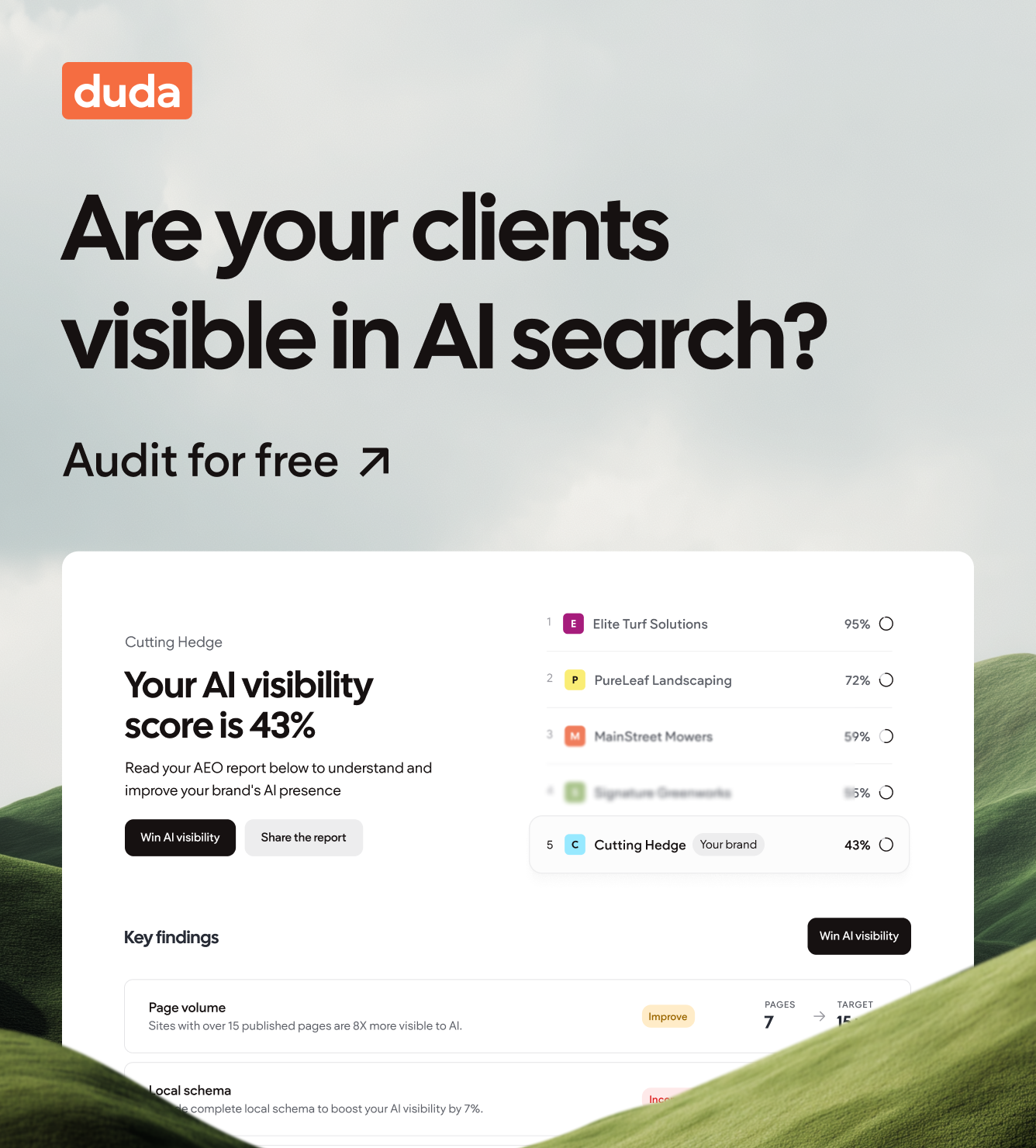
The landscape of how homeowners find services is changing. Traditional SEO, which focuses on ranking a website in a list of links, is now joined by AEO. Answer engine optimization prepares content for AI-driven interfaces like digital assistants and generative search experiences. These engines aim to provide a single, definitive answer to a user's query rather than a list of options.
For a local plumber, this means the goal is no longer just appearing on the
first page of Google. The goal is being the specific business recommended when a user asks their phone, smart speaker, or favorite AI assistant for the best-rated plumber nearby.
SaaS providers that offer structured, schema-rich website templates allow their customers to feed these engines the precise data they require. This includes service areas, real-time availability, and verified reviews. By automating the technical requirements of AEO, you give your customers a competitive advantage that they likely cannot achieve on their own.
Driving lead volume through local SEO
Local SEO remains the most effective way for home service professionals to capture high-intent traffic. Most service providers lack the time or technical expertise to manage the complexities of local rankings. They often settle for outdated, slow, or non-responsive websites that actively repel potential customers.
When your SaaS platform provides a built-in website solution, you can standardize the elements that drive local rankings:
- Localized landing pages: Automatically generate pages, in bulk, for every suburb or city your customer serves.
- Performance and speed: Ensure every site passes core web vitals, a critical factor for mobile search rankings.
- Mobile-first design: Since most home service searches occur on mobile devices, providing a seamless mobile experience is a baseline requirement for conversion.
By handling these technical hurdles, you ensure your customers appear exactly where their prospects are looking. When a provider sees a steady stream of leads originating from a site powered by your platform, the perceived value of your software increases significantly.
Improving customer retention and lifetime value
The SaaS market is crowded, and price competition is constant. To protect your margins and reduce churn, you must
become indispensable. There is no better way to achieve indispensability than by becoming a revenue generator for your clients.
If a landscaping company uses your software for scheduling but finds their own leads through expensive third-party aggregators, your platform is an expense they might cut during a lean month. However, if your platform provides the website that generates those leads directly, your software becomes the most important line item in their budget.
Providing websites also creates a
sticky ecosystem. Transitioning to a new field service management tool is difficult, but moving to a high-ranking website that is integrated with your business data is even more daunting. This integration fosters long-term loyalty and allows you to increase your average revenue per user (ARPU) by offering website management as a premium tier or add-on service.
Streamlining the path to conversion
Attracting a visitor to a website is only half the battle. For home service providers, the website must act as a high-conversion sales tool. Many providers lose business because their contact forms are broken, their phone numbers are not click-to-call, or they lack a clear way to book an estimate.
A website solution integrated with your SaaS platform eliminates these points of friction. You can embed your native booking widgets, real-time scheduling calendars, and customer portals directly into the site. This creates a seamless transition from a Google search to a confirmed appointment in your system.
This automation benefits both parties. The service provider spends less time on the phone qualifying leads, and the SaaS company sees higher data throughput, which provides better insights into the health of the customer’s business.
Building brand authority in the local market
Trust is the currency of the home service industry. A professional, modern website signals reliability and competence. Conversely, a site that is difficult to navigate or looks dated can drive a prospect toward a competitor, even if that competitor has fewer years of experience.
Your SaaS platform can provide templates designed specifically for the trades. These designs should prioritize trust signals, such as:
- Prominent display of certifications and insurance.
- Integrated customer testimonials and star ratings.
- High-quality galleries of completed work.
By providing the framework for a professional digital presence, you help small businesses compete with large national franchises. This empowerment builds a deep level of trust between you and your users.
Using data to prove ROI
One of the greatest challenges for SaaS companies is demonstrating the tangible return on investment (ROI) of their product. When you provide the website, you gain access to the full customer journey. You can show your users exactly how many leads the website generated, which services are most in demand in specific areas, and the conversion rate of their booking pages.
Presenting these metrics in a clean, accessible dashboard within your software turns abstract benefits into concrete proof of value. It allows your sales and success teams to have data-driven conversations about how your platform is growing their business, rather than just helping them manage it.
Scaling your SaaS through professional website services
Integrating website capabilities into your SaaS offering is more than a feature update. It elevates your business model, aligning your success with the success of your customers. By focusing on outcomes like more leads, higher profits, and better local visibility, you position your company as a leader in the field service technology space.
The technology exists to make high-ranking, high-converting websites accessible to every local service provider. By taking on the responsibility of local SEO and AEO for your clients, you remove a significant barrier to their growth and secure your own place as their most valued partner.