Artificial intelligence alone is not a strategy. For many digital marketing agencies, the sudden influx of AI tools has created a paradox: they are producing more content than ever before, yet their profit margins remain stagnant and their teams feel more overwhelmed. The reason is simple. AI provides speed, but only systems provide scale.
If you treat AI as a collection of individual shortcuts, you create a fragmented workflow that requires constant human intervention to fix. To move faster and make better decisions, you must shift your focus from what AI can do to how your systems govern that output. This article explores how to integrate AI into a structured agency framework that drives predictable growth and measurable results.
The trap of the AI productivity myth
Many agency owners believe that giving every employee a ChatGPT seat or an AI image generator will automatically increase billable capacity. In reality, without a system, AI often introduces new forms of technical debt. When every team member uses AI differently, you lose brand consistency, quality control, and data security.
Scaling an agency requires a repeatable process where the outcome is independent of the individual performing the task. If your AI usage depends entirely on the "prompt engineering" skills of a single creative director, you have not scaled; you’ve just moved the bottleneck. True scale occurs when you embed AI into your standard operating procedures (SOPs), ensuring that the technology serves the system rather than the other way around.
Defining the system: Three pillars of agency scale
To move beyond the "tool-first" mindset, you must build your agency around three core systemic pillars. These pillars ensure that AI acts as a multiplier for your existing expertise rather than a replacement for it.
1. Standardized input protocols
High-quality output begins with the data you feed into your tools. Instead of allowing team members to write prompts from scratch for every client project, create a centralized library of "Gold Standard" inputs. These protocols should include:
- Client persona maps: Detailed documentation of voice, tone, and audience pain points.
- Brand guardrails: Specific instructions on what the AI must never say or do.
- Structural templates: Pre-defined outlines for blog posts, landing pages, or site architectures.
By standardizing the input, you reduce the time spent on iterations and ensure that the first draft produced by AI is 80% of the way to the finish line.
2. The human-in-the-loop validation framework
Systems fail when they lack an accountability layer. As you integrate AI, your team's role shifts from "creators" to "editors and strategists." You must implement a formal validation step where a human expert reviews AI-generated work against a specific checklist:
- Fact-checking: Verifying all data points and citations.
- Strategic alignment: Ensuring the content serves the client’s specific conversion goals.
- Emotional resonance: Adding the nuance and empathy that algorithms cannot replicate.
This system protects your agency’s reputation and ensures that the speed of AI does not come at the cost of professional integrity.
3. Integrated platform architecture
The most significant barrier to scale is a "Frankenstein" tech stack. If your team has to copy and paste AI content between five different apps to get a website live, you are losing the time you gained.
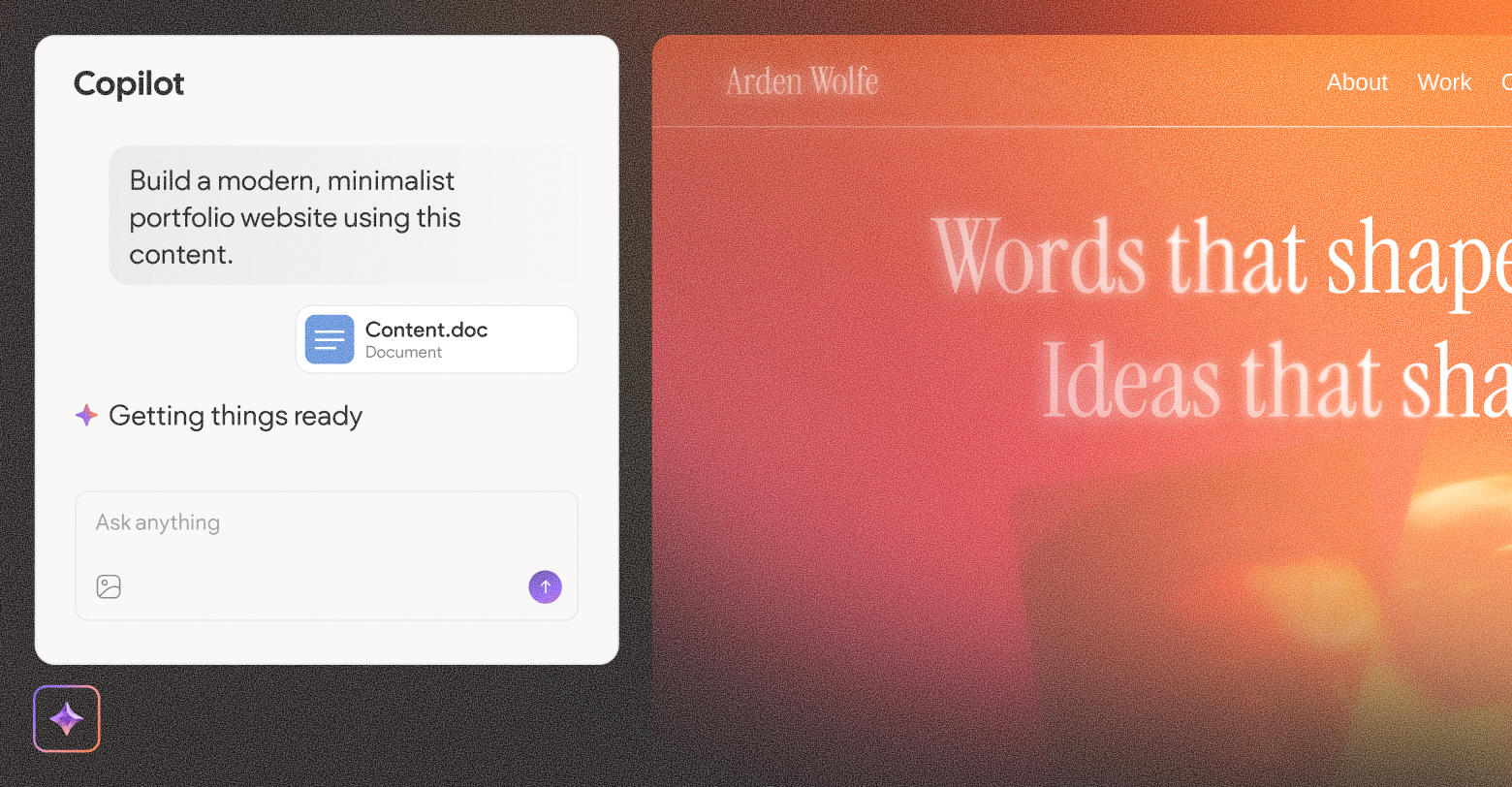
Scalable agencies use platforms that bake AI directly into the production environment. When
AI is integrated into your website builder or project management tool, it eliminates the "integration tax." This allows your team to generate SEO metadata, draft sections, or adjust layouts without leaving the workspace, directly reducing the total hours required to launch a client site.
Moving from tasks to outcomes
When you build systems, you stop selling hours and start selling outcomes. AI allows you to compress the time it takes to perform a task, but your system allows you to capture the value of that time.
Consider the process of building a client website. Without a system, AI helps you write the copy faster. With a system, you use AI to analyze the client’s existing data, generate a site map based on proven conversion patterns, and populate a template designed for high performance. The result is not just a "faster website," but a more effective marketing asset delivered in half the time.
Measuring the success of your systems
To confirm your systems are working, track these three metrics instead of just looking at total output:
The practical path to implementation
You do not need to overhaul your entire agency overnight. Start by identifying the most repetitive, time-consuming task in your current
workflow—likely site migration, content drafting, or SEO tagging.
First, document the manual process exactly as it exists today. Second, identify where an AI tool can accelerate a specific step. Third, create a checklist that a junior staff member can use to verify that the AI's work meets your agency's standards. This is how you build a system.
By focusing on the architecture of your workflow, you ensure that AI serves your long-term business goals. You transition from an agency that is "experimenting with AI" to an agency that is built for the future of digital marketing.