In May 2026, Applebot visited 600,000 Duda sites nearly
58 million times.
A crawler does not hit 58 million pages by accident. Applebot was moving through the everyday web that powers local discovery: service pages, location pages, restaurant menus, product catalogs, blog posts, and the thousands of business websites agencies publish and maintain for their clients.
Last week, Apple introduced
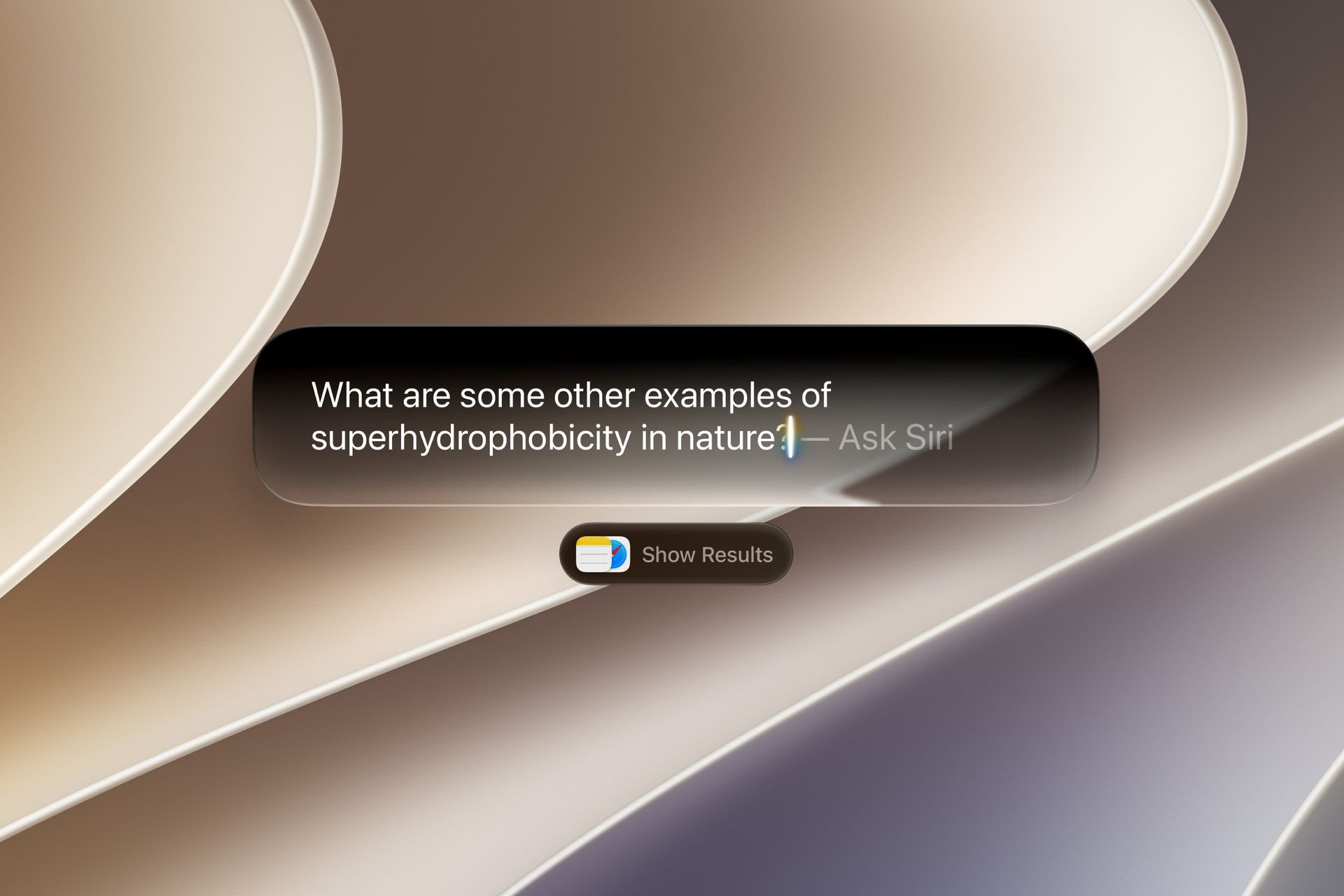
Siri AI, a new version of Siri built around personal context, on-screen awareness, app actions, and broad world knowledge from the web. Apple described Siri AI as an assistant that can answer questions from the web on virtually any topic, then help a user take action across apps.
For website owners, that matters.
Siri has historically acted as a layer on top of search, helping users find information and then handing them off to a list of results. Apple’s new direction puts the answer much closer to the interaction itself. It lives on the phone. It can see more context. It can produce a direct answer. In some cases, it may cite or link to the sources it used.
Image courtesy of Apple
Google is moving in the same direction with
Gemini Intelligence on Android. Google says Gemini will automate multi-step tasks across apps, use screen and image context, summarize web content in Chrome, and help users complete forms. Search is becoming more embedded in the software people already use, often appearing right when they need information or are trying to complete a task.
This changes where people discover businesses online.
Local visibility has steadily moved closer to the answer itself. A business might have competed for a spot on a search results page, then for placement in a map pack, a featured snippet, or an AI Overview. Now the interaction can be even more compressed: someone asks their phone for a recommendation, and the device itself returns a single answer or a very short list, leaving fewer opportunities to be discovered.
That should get the attention of every agency that manages SMB websites.
Applebot is now part of the AEO conversation
Apple’s
Applebot support article explains the relationship between Apple’s crawler and these newer AI experiences. Apple says data crawled by Applebot is used for search technology across Spotlight, Siri, Safari, and other Apple experiences. It also says Applebot-crawled data may be used to help train Apple foundation models and to provide additional context and up-to-date content when AI models generate answers in Apple products.
That language connects the crawler to the answer.
Apple also gives publishers controls. Applebot-Extended allows a publisher to opt out of having site content used to train Apple’s general-purpose foundation models. The nosnippet directive can keep content from being used as additional context in AI-generated answers, while still allowing the page to remain discoverable in some Apple search experiences. Applebot also supports more familiar controls like noindex, nofollow, and X-Robots-Tag headers.
Those controls are useful, but most local businesses will have the opposite problem. They do not need to hide from Applebot. They need to be understood by it.
Apple’s own ranking guidance still sounds familiar to anyone who has worked in SEO: relevance to the page topic, links from other pages, approximate user location, engagement with results, and webpage design characteristics. Apple also notes that Applebot may render a site in a browser and needs access to the resources required to render the page properly.
Video courtesy of Apple
That is basic technical SEO, but the use case has expanded. Applebot helps Apple understand and index content for search experiences across Siri, Spotlight, Safari, and other services. As answer-driven experiences become more common, making content accessible and understandable to crawlers becomes increasingly important.
AEO is not replacing SEO as much as tightening the standard
Duda’s AEO research points in the same direction. In our study of more than 850,000 websites with 69 million AI crawler visits, AI-crawled sites generated 320% more human traffic than non-crawled sites. They also generated 270% more form submissions and 250% more click-to-call events.
The pattern was practical. Sites with blogs, local schema, Google Business Profile synchronization, and dynamic pages were crawled 400% more than the median site built on Duda. Each blog post was associated with a 7% increase in crawler visits. Each additional page was associated with a 4% increase.
Those findings do not suggest that agencies need to throw away their SEO playbooks. They suggest the opposite. AEO rewards the parts of SEO that were always most useful to real people: clear pages, specific services, accurate locations, consistent business information, clean rendering, and enough content for a system to understand what the business actually does.
Superficial homepages have always been suboptimal for SEO, and they are even less effective in the era of AI search. If an AI is trying to help a user find a plumber for an emergency pipe burst, it cannot rely on a vague landing page. To provide a recommendation, a model needs granular service details, precise location context, and consistent trust signals that verify your business across the entire web.
The work is not mysterious. It is just more exacting.
What agencies should do now
Start with crawlability. Important pages should not be blocked by robots.txt, hidden behind broken scripts, or marked noindex by accident. Apple’s documentation specifically warns that blocked JavaScript, CSS, or other resources can prevent Applebot from rendering a page properly. That is not an abstract technical issue. If the crawler cannot see the page the way a user sees it, the business is harder to understand.
Then look at the content itself. A service business should have pages for the services people actually ask about. A multi-location business should not expect one generic page to carry every market. A restaurant should make menus, hours, reservation details, dietary information, and neighborhood context easy to parse. The same principle applies across verticals.
Structured data matters because it gives crawlers a cleaner way to interpret the page. For local businesses, schema should reinforce the basics: business name, address, phone number, hours, services, reviews, and location relationships. This does not make weak content strong. It helps good content travel farther.
Freshness matters too, but not in the cheap sense of changing a sentence so a page looks updated. Real businesses evolve over time. They introduce new services, adjust operating hours, hire new staff, and respond to changes in their market. A blog, resource center, or news section creates opportunities to reflect those changes while answering the kinds of specific questions potential customers are already asking. Duda’s research found a measurable relationship between blog posts and crawler activity, which aligns with the way Apple and Google are increasingly relying on web content to inform AI-generated answers.
Finally, treat AEO as a system, not a page-level trick. Applebot, Gemini, AI Overviews, ChatGPT Search, and other answer engines will not all behave the same way. The common ground is still clear: make the site accessible, make the business easy to understand, and publish enough useful information for a machine to answer a real customer’s question without guessing.
The phone is becoming the search interface
The most important search experience for a local business may not start on a search engine results page. It may start when someone holds the side button on an iPhone, asks Siri for help, and gets an answer that combines web knowledge with personal context. It may start in Chrome on Android, where Gemini can summarize options and help complete the next step.
That matters for Duda partners because SMB websites are often the source material. They are the pages Applebot crawls. They are the content Gemini may summarize. They are the local signals that help an answer engine decide whether a business is relevant.
AEO is not a separate discipline reserved for enterprise brands with large content teams. It is becoming part of the baseline work of building and maintaining a useful website.
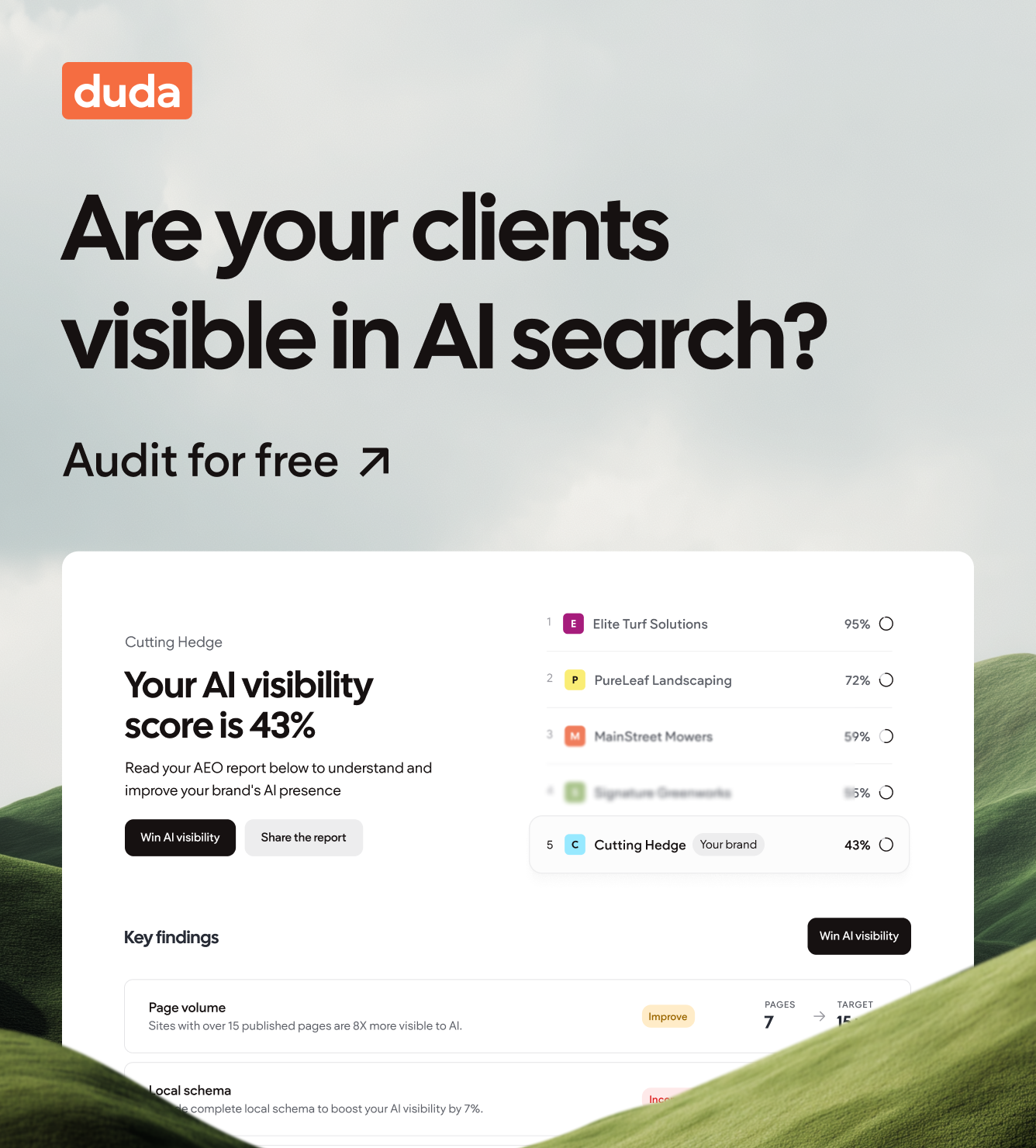
As answer engines become a larger source of discovery, agencies need better visibility into how AI systems see their clients’ websites.
Duda AEO was built for that purpose, helping agencies understand AI crawler activity, identify opportunities to improve discoverability, and track how websites are positioned for emerging answer engines.