13 Duda-Friendly Tools For Increasing Your Digital Agency’s Service Offering

June 8, 2020
0 minute read

After a few months of building websites, you might have come across clients with needs that our website builder just can’t fulfill with the standard set of tools inside the Duda platform. 

Things like online ordering for restaurants or event management for concert venues aren’t widgets that we currently offer. However, that doesn’t have to stop you from creating the best sites possible for your clients.

There are dozens of services out there that make it easy to integrate these tools into your site, even if it’s not available as a built-in widget.

From enabling online ordering to having live chat on your site, here are 13 awesome tools that you can easily embed into any Duda site.

Contact forms

Duda’s contact form is a great tool that’s needed for any of your clients’ online sites. However, there may be times when you need much more from a contact form. Luckily, there are dozens of choices out there.

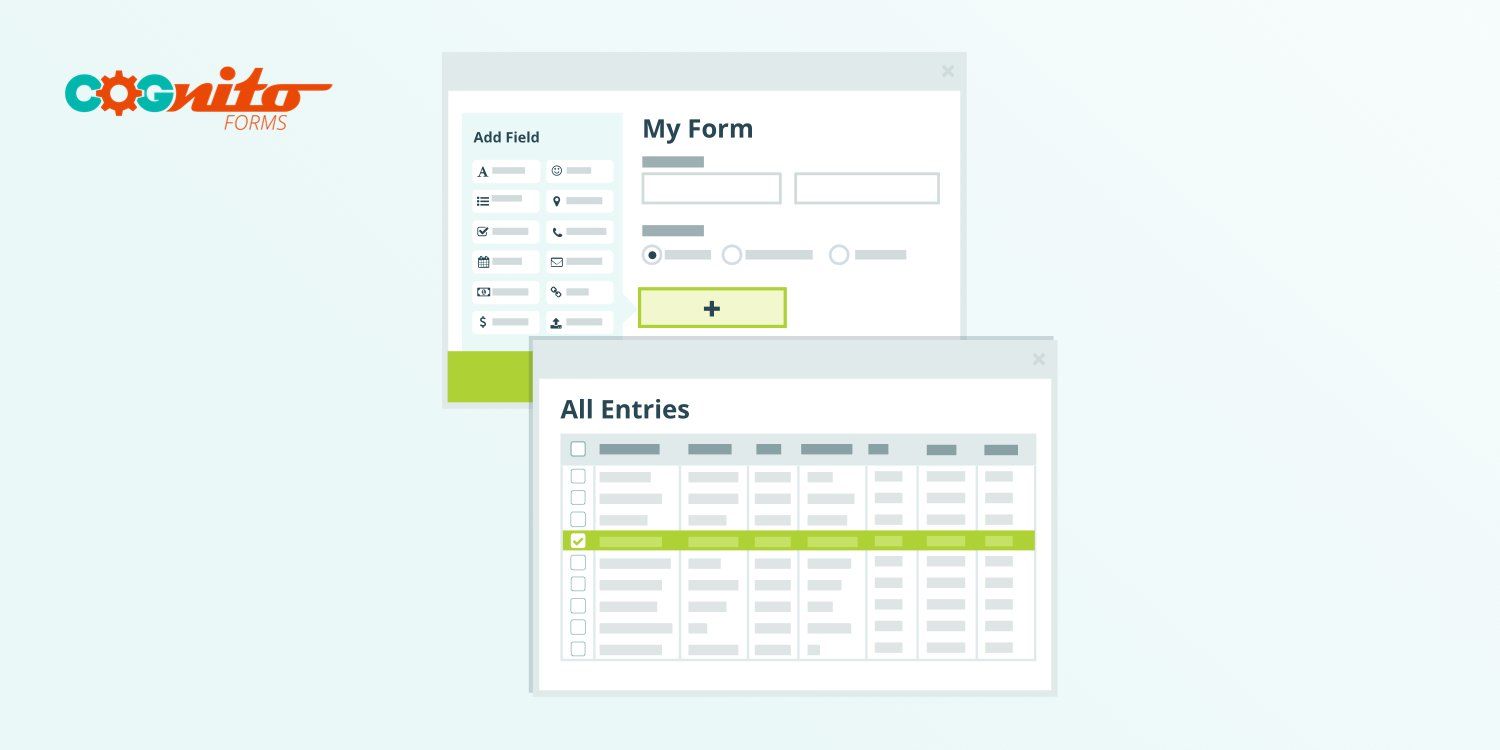
Cognito Forms

Cognito Forms is a great all around form builder with a ton of features. It can take payments, run calculations, has form logic for complex forms and even collects signatures.

Besides the built-in features, it also connects with Zapier to allow for even more integrations between Cognito Forms and other platforms (like pushing form entries to Mailchimp or Google sheets).

Building a Cognito form doesn’t require any coding or design knowledge at all and they have several templates to start from. Once you’re done building out your form, grab the embed code to put it on your website using the HTML widget.

Pricing: Ranges from “Free for 500 submissions” to “$99/month for unlimited submissions”. See all their pricing plans here.

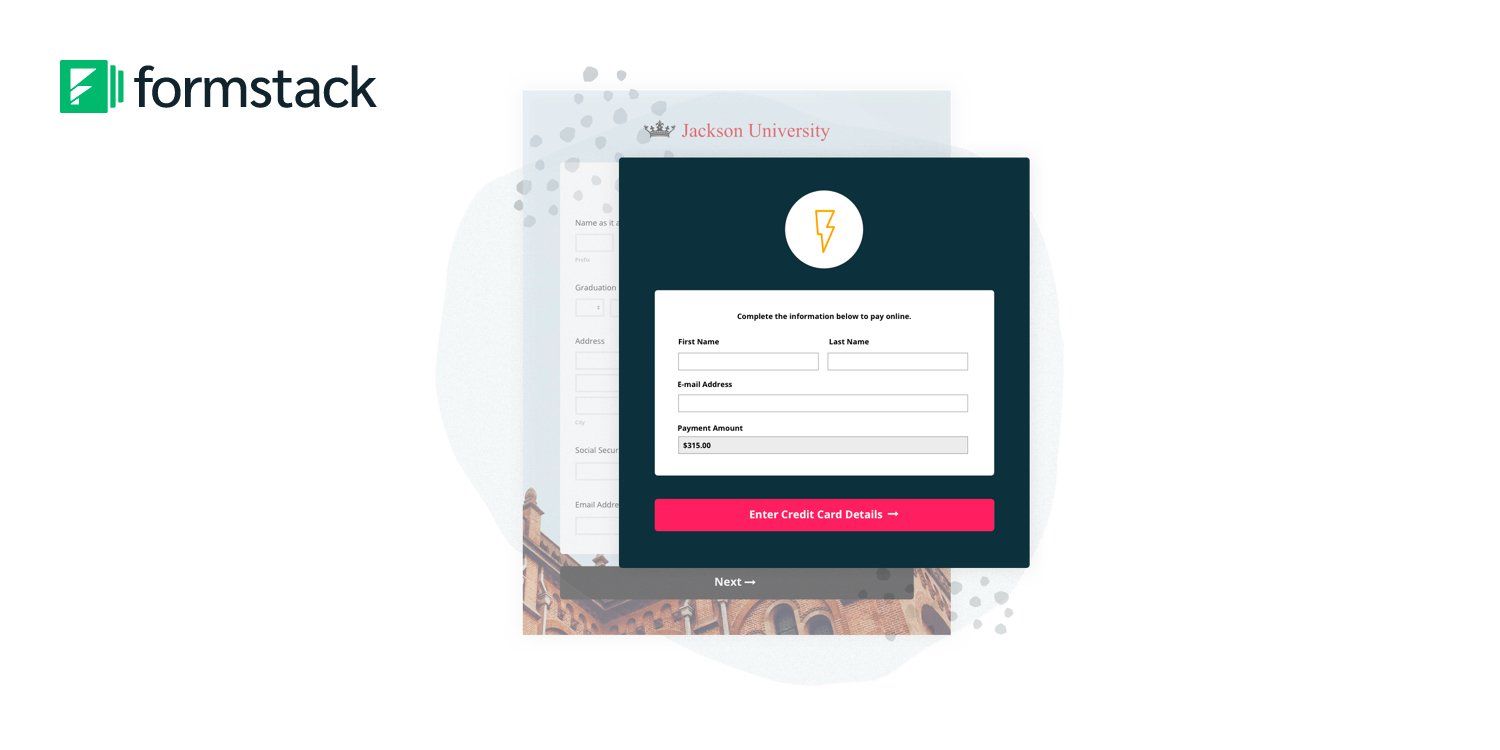
Formstack

Formstack is a premium, robust form builder that can do almost anything.

Like Cognito Forms, it also takes payments and allows for complex form logic. What differentiates it from other forms is their data-driven approach.

Formstack allows for A/B form testing, has conversion analytics, data routing, and it also collects data from incomplete forms. If you want to impress your clients with how you’re improving conversion on their site, Formstack takes the cake.

Pricing: Ranges from $19/mo to $249/mo. Enterprise plans are also available. 

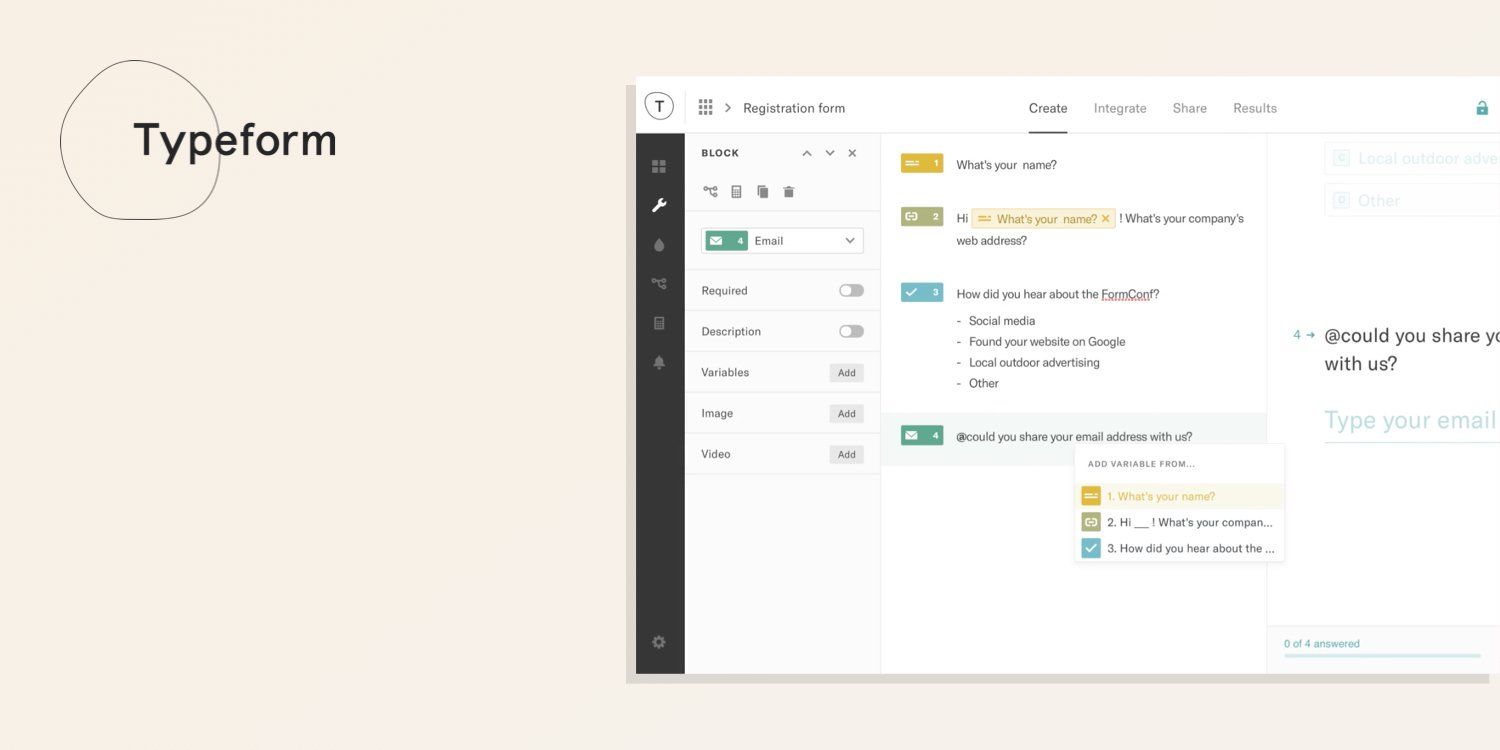
Typeform

Typeform is a beautiful form creator. With its design and simplicity, I find this to be the best form generator for creating trendy multi-step forms.

If you haven’t used it before, multi-step forms are different from normal contact forms. Instead of displaying the entire form upfront, it displays the form in a series of steps. As each field in the form is filled in, it will display a new field based on the user’s previous answer.

Talking about it doesn’t do it justice — you can see just how beautiful their forms are on the Typeform homepage.

Event Management

Tockify

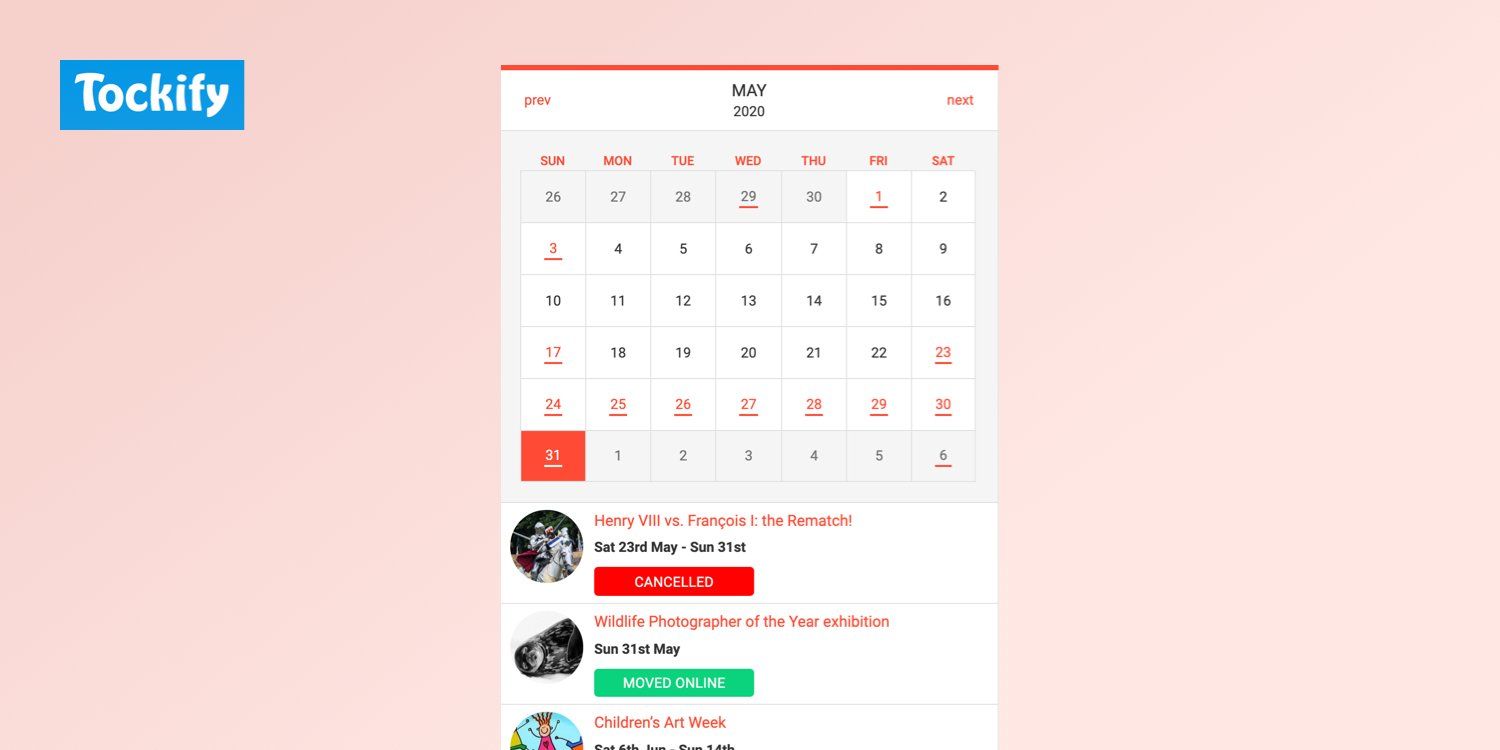
Tockify is a beautiful calendar and event management widget that can be embedded on any site using Duda’s HTML widget. It syncs with Google Calendar and can collect public submissions to the calendar, which allows it to become an interactive element in any page you create. I recommend this to anyone who’s building a website for an SMB that does events like concerts or shows. Tockify even allows you to add ticket links for sales and an RSVP button to let your clients know how many people are attending.

Embeddable calendar widgets are pretty rare to find, so I love that this is ready to use out of the box. Even without mocking up the design, it looks modern and has a low difficulty level for letting your client manage their events through the platform.

Cost: Ranges from free to $40 depending on the features you need. See their pricing page here.

Restaurant tools

Gloriafoods

Gloriafoods is an online menu and ordering system built for restaurants, which allows users to both view a restaurant’s menu and place an order online.

The checkout process is fairly simple and allows the user to specify the delivery method and time to pick up. Once an order is received, it’ll go directly to a tablet or a mobile device with the order details to be processed. Since many restaurants already use tablets as their point-of-sale, this means that the cashier will be able to get the order and pass it to their staff to be prepared.

Cost: Free

Membership tools

MemberSpace has a mission "to help anyone build a sustainable membership business (without coding) anywhere on the internet." And their easy-to-use tools do just that. MemberSpace can be set up on a Duda website in under 20 minutes with no coding required.

What's nice about MemberSpace is they offer a simple floating widget to the website to encourage customers to sign up.

MemberSpace pricing is interesting at just $25/mo plus a 4% transaction fee per member.

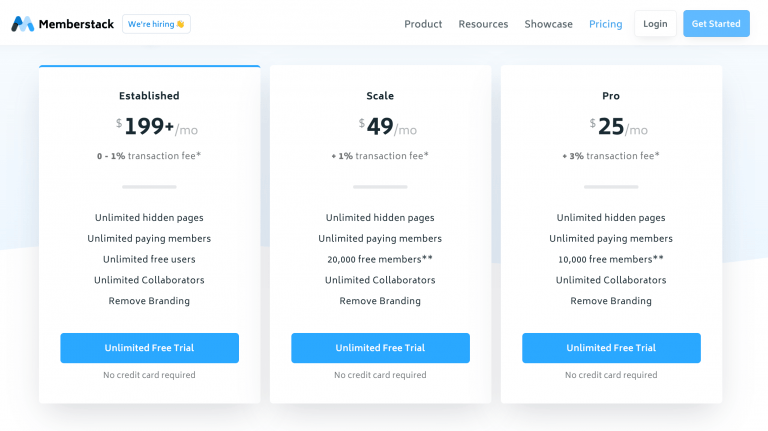
MemberStack is slightly more complicated to set up than MemberSpace, but no less useful. The platform offers membership features specifically tailored for all kinds of use cases like Clubs & Associations, Lead Generation, Subscription Businesses, Paid Memberships and more.

Pricing ranges from $25/mo to $199+/mo.

GoPaywall

GoPaywall is a membership paywall system that can activate a “members only” content section on any website. It’s a perfect solution for clients who might have a “members only” section for premium content they create.

It works by first having you install an embed code (JavaScript and some HTML) into your Duda editor. From there, it prompts users to sign up or subscribe before accessing restricted content.

It can be a great solution for clients who are looking to build a membership platform, though be advised that the setup process for this can be a little technically challenging.

Cost: $30/mo or $270/yr

desiGn resources

Unsplash

Unsplash is an excellent repository of high-resolution images for free use. Okay, it’s not exactly a tool you can embed it into your site. It’s an awesome resource for getting crisp, high-resolution images that you can use for free on your clients’ pages. The images posted here are completely free and can be modified or used on your website without having to seek permission so you can use these as a background for your rows or as landing page photos without having to worry getting in trouble with copyrights.

To learn more, check out Sales Strategies to Grow Your Agency at Duda University.


The Noun Project

The Noun Project is a great resource for finding high-quality icons to put on your Duda site. Similar to Unsplash, it’s not a tool per se, but it is still a great resource you can utilize, especially if you want a more modern look on the pages you’re building.

Icons are great for simplifying communication on your website and add a nice minimalist flare to your designs. Their database of one million icons is surprisingly easy to search through, and the icons are very cheap to purchase.

Cost: Free for NounProject membership and an annual pro plan is $39.99.

SEO tools

Schema Script Generator

This JSON-LD Schema Markup Generator was developed by J.D. Flynn and is free to use. For those who aren’t familiar with Schema, Schema is a way of displaying specific data in a way that Google and other aggregators can understand – For example, instead of Google having to guess the address of your client’s business by crawling the site, you can have this specific set of information displayed to Google via the schema code you put in the header.

Google loves this information. If you’re also doing SEO for your clients, they’ll love you too when their pages begin getting boosted by the schema you placed in.

Cost: Free

Tawk.to

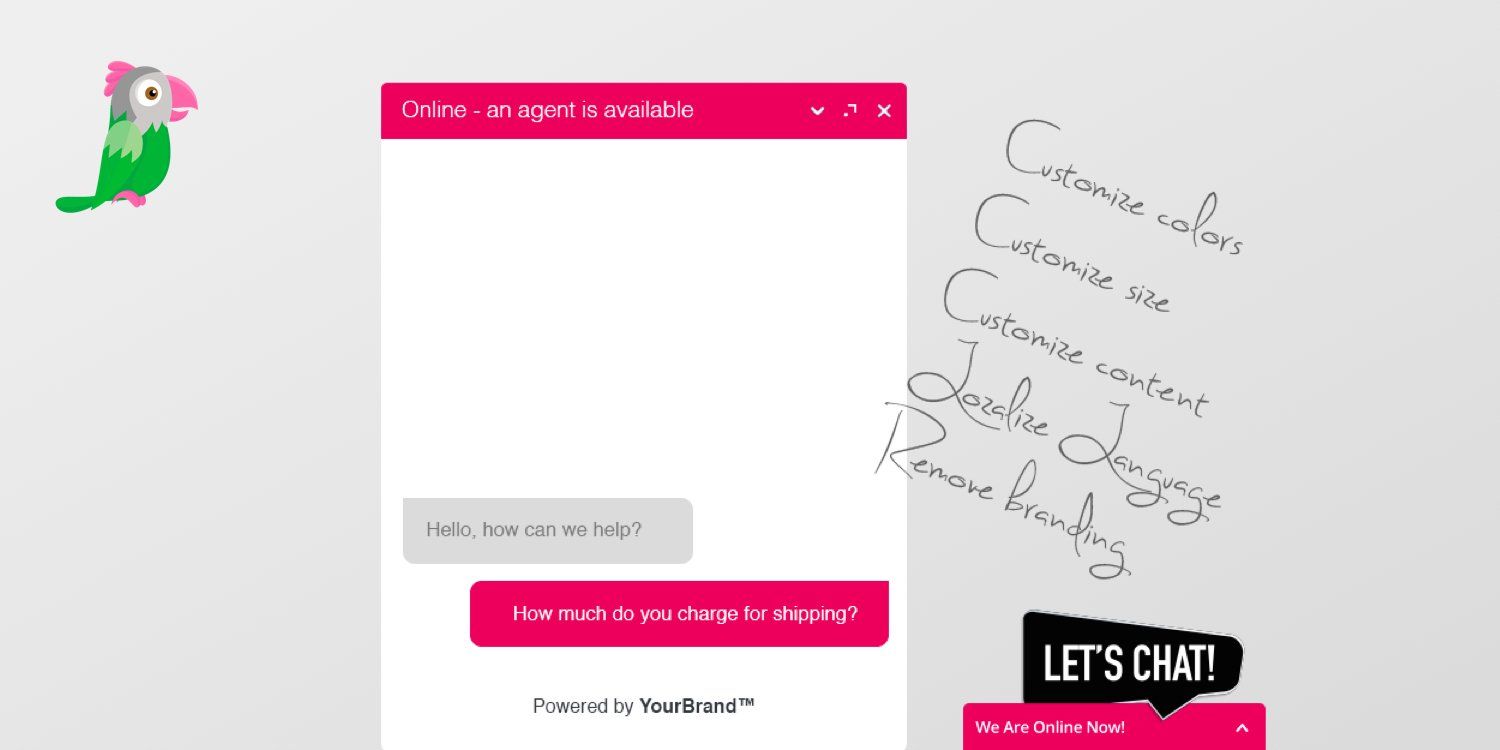
Tawk.to is a free messaging app that displays on any live site. Since it allows for real-time communication, it’s a great tool for clients who love every opportunity at connecting with their customers. Chats are submitted to an inbox that can also be viewed and responded to on your mobile device. There are also triggers to pop up with an automated message, prompting the end user for to chat.

Powr 

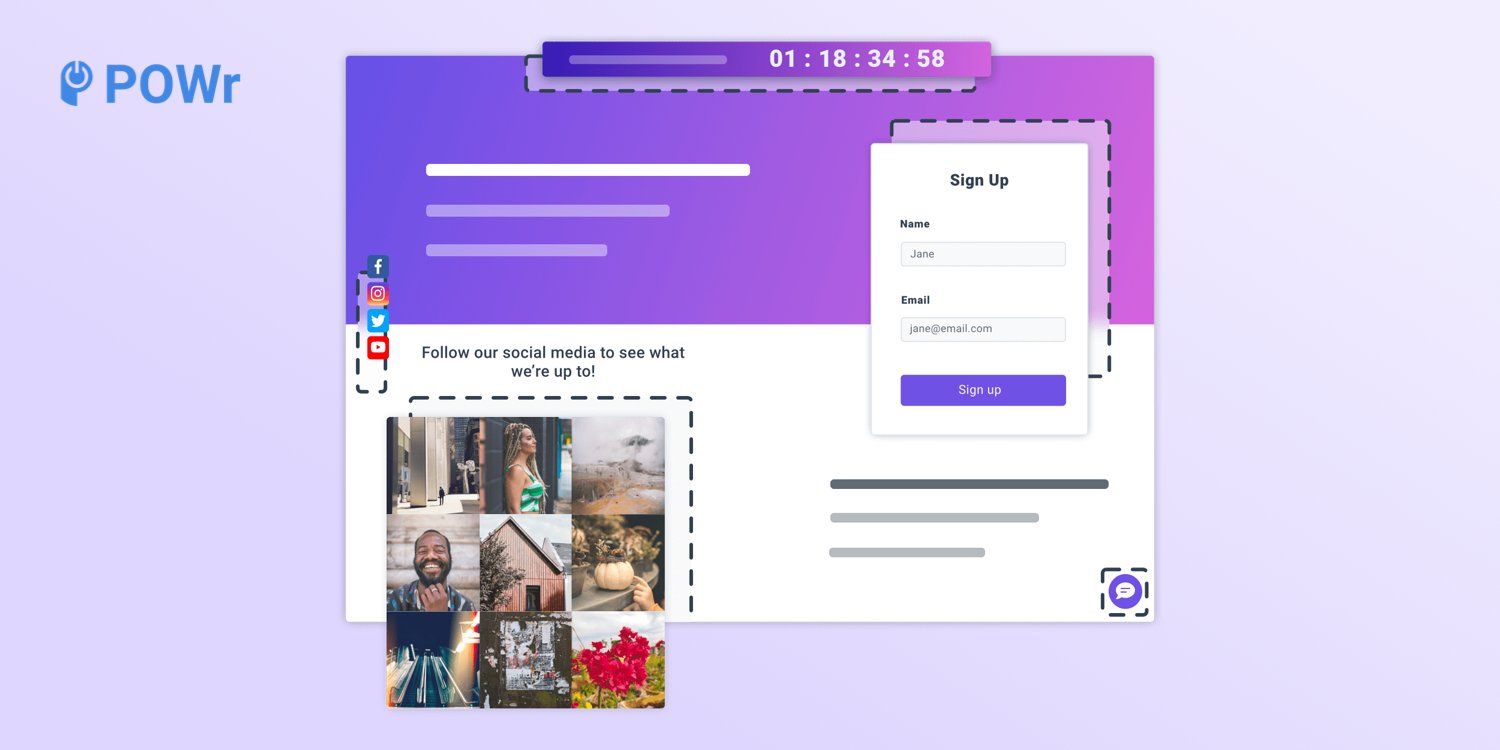
Powr.io offers a collection of embeddable plugins for your website. There are more than 50 different plugins in all that you can modify and embed — that’s right, fifty. For perspective, that’s almost the same amount of widgets we have in Duda’s editor, so it’s awesome to see such a huge amount of ready-to-embed tools in one place.

Some of the functionality that can be found here are digital purchase buttons, pricing tables, resumes, countdowns, counters and way more.

If you get stuck, there’s plenty of documentation to help you out with getting their tools installed.

Ending note

As a reminder, you never have to be limited by a “lack of features.” While there’s plenty of core functionality in Duda’s platform to enable you to build any kind of amazing site you wish, you can also use any of the tools in this blog post to really impress your prospects.

If you haven’t used any of these before, this might be a great opportunity to send an email blast to your customers, letting them know you can add some additional functionality to the website you built for them.

Of course, everything listed here is really just the surface of what other services you can easily add to Duda’s platform. If you have any other awesome tools that weren’t mentioned here, add it to the comment below. We’d love to see what other third-party services your clients love!

This post was originally published April 17, 2017 and updated June 7, 2020.


Did you find this article interesting?


Thanks for the feedback!
By Shawn Davis April 1, 2026
Core Web Vitals aren't new, Google introduced them in 2020 and made them a ranking factor in 2021. But the questions keep coming, because the metrics keep changing and the stakes keep rising. Reddit's SEO communities were still debating their impact as recently as January 2026, and for good reason: most agencies still don't have a clear, repeatable way to measure, diagnose, and fix them for clients. This guide cuts through the noise. Here's what Core Web Vitals actually measure, what good scores look like today, and how to improve them—without needing a dedicated performance engineer on every project. What Core Web Vitals measure Google evaluates three user experience signals to determine whether a page feels fast, stable, and responsive: Largest Contentful Paint (LCP) measures how long it takes for the biggest visible element on a page — usually a hero image or headline — to load. Google considers anything under 2.5 seconds good. Above 4 seconds is poor. Interaction to Next Paint (INP) replaced First Input Delay (FID) in March 2024. Where FID measures the delay before a user's first click is registered, INP tracks the full responsiveness of every interaction across the page session. A good INP score is under 200 milliseconds. Cumulative Layout Shift (CLS) measures visual stability — how much page elements unexpectedly move while content loads. A score below 0.1 is good. Higher scores signal that images, ads, or embeds are pushing content around after load, which frustrates users and tanks conversions. These three metrics are a subset of Google's broader Page Experience signals, which also include HTTPS, safe browsing, and mobile usability. Core Web Vitals are the ones you can most directly control and improve. Why your clients' scores may still be poor Core Web Vitals scores vary dramatically by platform, hosting, and how a site was built. Some of the most common culprits agencies encounter: Heavy above-the-fold content . A homepage with an autoplay video, a full-width image slider, and a chat widget loading simultaneously will fail LCP every time. The browser has to resolve all of those resources before it can paint the largest element. Unstable image dimensions . When an image loads without defined width and height attributes, the browser doesn't reserve space for it. It renders the surrounding text, then jumps it down when the image appears. That jump is CLS. Third-party scripts blocking the main thread . Analytics pixels, ad tags, and live chat tools run on the browser's main thread. When they stack up, every click and tap has to wait in line — driving INP scores up. A single slow third-party script can push an otherwise clean site into "needs improvement" territory. Too many web fonts . Each font family and weight is a separate network request. A page loading four font files before rendering any text will fail LCP, especially on mobile connections. Unoptimized images . JPEGs and PNGs served at full resolution, without compression or modern formats like WebP or AVIF, add unnecessary weight to every page load. How to measure them accurately There are two types of Core Web Vitals data you should be looking at for every client: Lab data comes from tools like Google PageSpeed Insights, Lighthouse, and WebPageTest. It simulates page loads in controlled conditions. Lab data is useful for diagnosing specific issues and testing fixes before you deploy them. Field data (also called Real User Monitoring, or RUM) comes from actual users visiting the site. Google collects this through the Chrome User Experience Report (CrUX) and surfaces it in Search Console and PageSpeed Insights. Field data is what Google actually uses as a ranking signal — and it often looks worse than lab data because it reflects real-world device and connection variability. If your client's site has enough traffic, you'll see field data in Search Console under Core Web Vitals. This is your baseline. Lab data helps you understand why the scores are what they are. For clients with low traffic who don't have enough field data to appear in CrUX, you'll be working primarily with lab scores. Set that expectation early so clients understand that improvements may not immediately show up in Search Console. Practical fixes that move the needle Fix LCP: get the hero image loading first The single most effective LCP improvement is adding fetchpriority="high" to the hero image tag. This tells the browser to prioritize that resource over everything else. If you're using a background CSS image for the hero, switch it to anelement — background images aren't discoverable by the browser's preload scanner. Also check whether your hosting serves images through a CDN with caching. Edge delivery dramatically reduces the time-to-first-byte, which feeds directly into LCP. Fix CLS: define dimensions for every media element Every image, video, and ad slot on the page needs explicit width and height attributes in the HTML. If you're using responsive CSS, you can still define the aspect ratio with aspect-ratio in CSS while leaving the actual size fluid. The key is giving the browser enough information to reserve space before the asset loads. Avoid inserting content above existing content after page load. This is common with cookie banners, sticky headers that change height, and dynamically loaded ad units. If you need to show these, anchor them to fixed positions so they don't push content around. Fix INP: reduce what's competing for the main thread Audit third-party scripts and defer or remove anything that isn't essential. Tools like WebPageTest's waterfall view or Chrome DevTools Performance panel show you exactly which scripts are blocking the main thread and for how long. Load chat widgets, analytics, and ad tags asynchronously and after the page's critical path has resolved. For most clients, moving non-essential scripts to load after the DOMContentLoaded event is a meaningful INP improvement with no visible impact on the user experience. For websites with heavy JavaScript — particularly those built on frameworks with large client-side bundles — consider breaking up long tasks into smaller chunks using the browser's Scheduler API or simply splitting components so the main thread isn't locked for more than 50 milliseconds at a stretch. What platforms handle automatically One of the practical advantages of building on a platform optimized for performance is that many of these fixes are applied by default. Duda, for example, automatically serves WebP images, lazy loads below-the-fold content, minifies CSS, and uses efficient cache policies for static assets. As of May 2025, 82% of sites built on Duda pass all three Core Web Vitals metrics — the highest recorded pass rate among major website platforms. That baseline matters when you're managing dozens or hundreds of client sites. It means you're starting each project close to or at a passing score, rather than diagnosing and patching a broken foundation. How much do Core Web Vitals actually affect rankings? Honestly, they're a tiebreaker — not a primary signal. Google has been clear that content quality and relevance still dominate ranking decisions. A well-optimized site with thin, irrelevant content won't outrank a content-rich competitor just because its CLS is 0.05. What Core Web Vitals do affect is the user experience that supports those rankings. Pages with poor LCP scores have measurably higher bounce rates. Sites with high CLS lose users mid-session. Those behavioral signals — time on page, return visits, conversions — are things search engines can observe and incorporate. The practical argument for fixing Core Web Vitals isn't just "because Google said so." It's that faster, more stable pages convert better. Every second of LCP improvement can reduce bounce rates by 15–20% depending on the industry and device mix. For client sites that monetize through leads or eCommerce, that's a revenue argument, not just an SEO argument. A repeatable process for agencies Audit every new site before launch. Run PageSpeed Insights and record LCP, INP, and CLS scores for both mobile and desktop. Flag anything in the "needs improvement" or "poor" range before the client sees the live site. Check Search Console monthly for existing clients. The Core Web Vitals report surfaces issues as they appear in field data. Catching a regression early — before it compounds — is significantly easier than explaining a traffic drop after the fact. Document what you've improved. Clients rarely see Core Web Vitals scores on their own. A monthly one-page performance summary showing before/after scores builds credibility and makes your technical work visible. Prioritize mobile. Google uses mobile-first indexing, and field data shows that mobile CWV scores are almost always worse than desktop. If you only have time to optimize one version, do mobile first. Core Web Vitals aren't a one-time fix. Platforms change, new scripts get added, campaigns bring in new widgets. Build the audit into your workflow and treat it like any other ongoing deliverable, and you'll stay ahead of the issues before they affect your clients' rankings. Duda's platform is built with Core Web Vitals performance in mind. Explore how it handles image optimization, script management, and site speed automatically — so your team spends less time debugging and more time building.
By Ilana Brudo March 31, 2026
Vertical SaaS must transition from tools to an AI-powered Vertical Operating System (vOS). Learn to leverage context, end tech sprawl, and maximize retention.
By Shawn Davis March 27, 2026
Automate client management, instant site generation, and data synchronization with an API-driven website builder to create a scalable growth engine for your SaaS platform.
Show More

Latest posts